When doing everything right isn’t enough: A Marine’s suicide shows that even the unlikeliest veteran can fall through the cracks.

By Ken Olsen

(Copyright 2011, All Rights Reserved) 

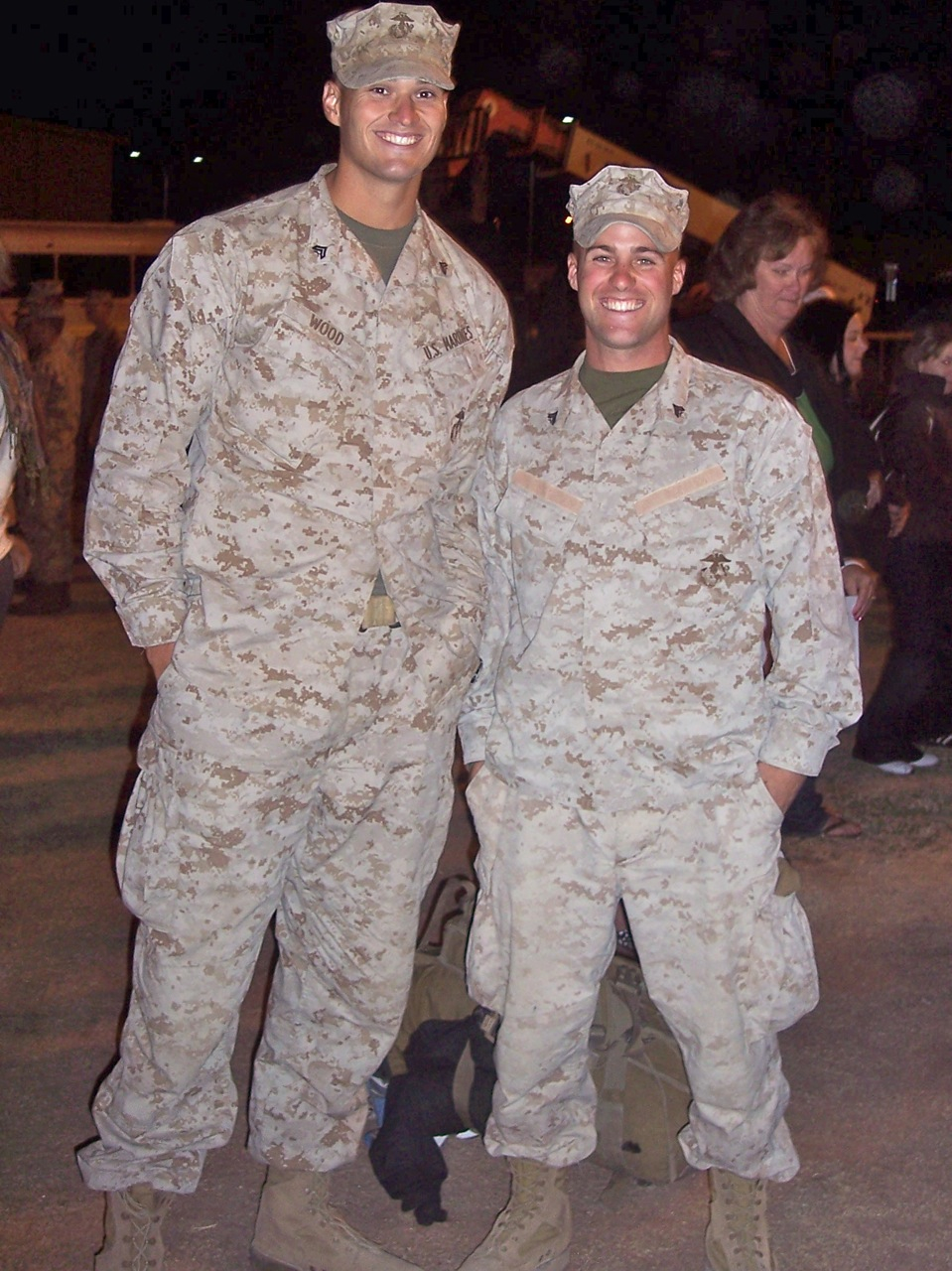
Jake Wood, (left) and Clay Hunt at 29 Palms shortly after returning from Afghanistan.

Of all the questions raised by Clay Hunt’s suicide, perhaps the most perplexing is this: why did a 28-year-old former Marine who was receiving VA health care, taking medications for post-traumatic stress and publicly pushing fellow veterans to get help, give up?

“I think if Clay can lose his battle with PTSD, anyone can,” says Jake Wood, Hunt’s best friend from the Marines. “He was taking all of the right steps to get help, and he fell through the cracks. The VA system failed him in a very dramatic way.”

John Wordin, executive director of Ride 2 Recovery and another of Hunt’s friends, says Clay’s death “tells us we’re not doing enough. It will haunt myself and Clay’s mother for a long time.”

Hunt grew up riding his bicycle and collecting turtles on the banks of Buffalo Bayou in west Houston. He attended Memorial Drive Methodist Church, where the youth pastor inspired him to volunteer by repairing homes in poor neighborhoods across the South. Hunt played sports and scored well on college-entrance exams, but didn’t have the class rank to gain entrance into first choice Texas A&M. After four on-and-off years of community college, he finally earned admission to Texas A&M, but instead decided to join the Marines.

“He said, ‘I want to do something bigger than myself, something that is not just about me,’” says Hunt’s mother, Susan Selke. Her son explained it all in a telephone call in the spring of 2005. “It was hard to get that phone call, but it was a good decision for Clay to make at that point in his life. He definitely excelled in the Marines.”

Hunt and Wood became friends after being assigned to the same infantry platoon a year later. They were about the same age, had both attended college and had similar interests. “He was a loyal, caring person,” Wood says.

The pair deployed to Iraq in January 2007. By early March, they had lost two good friends. Hunt’s bunkmate, Blake Howey, was killed by a roadside bomb. Nathan Windsor was mortally wounded when their convoy was attacked. Hunt, pinned down by enemy fire, couldn’t help Windsor and couldn’t return fire. Windsor died while being airlifted to a hospital.

Those deaths changed Hunt, says his father, Stacy, who received a call from his son soon after Windsor was killed. “For the first time, I could sense a real fear in his voice.”

Then a sniper’s bullet ripped through Hunt’s wrist in March. He was sent back to the United States to recover. “He hated leaving his buddies there,” Stacy Hunt says. “He knew what those guys were going through outside of Fallujah.

Selke says that’s when the PTS started – “the trauma of being shot and being separated from his group.”

A Purple Heart and PTS did not end Hunt’s combat days, as the family expected. Instead, he rejoined Wood and became one of the Marine Corps’ elite scout-snipers. He got married just before his platoon was sent to Afghanistan in March 2008. Soon after his arrival, two close friends from his former platoon were killed.

“He was starting to get disillusioned with the mission and the war, and it made it really tough for him,” Wood says. “We felt pretty impotent sitting back there in Kandahar twiddling our thumbs while our guys are out there getting killed.” Hunt’s platoon returned to the United States in October 2008, and he left the Marines the following spring.

Re-entering the civilian world was rough. Delays in getting GI Bill benefits forced him to live off his credit cards when he enrolled at Loyola Marymount University.

“It puts stress on every aspect of your life when you have $15,000 in credit-card debt, you aren’t making any money, your wife isn’t making much money, you’re standing in line four hours to get a counseling appointment, struggling with your transition, and you have to beat your head against the wall to get your benefits,” Wood says.

Hunt’s frustrations mounted. VA lost his disability-claim paperwork, forcing him to revisit doctors and reconstruct his 200-page file. That exacerbated his PTS, anxiety and exhaustion. “Clay told me, ‘I have to grovel for my benefits,’” Selke says.

Hunt also struggled to understand why he had been spared. The vivid memory of being unable to help his mortally wounded friend, lying on the road in front of him in Iraq, tortured him.

“He told me, ‘It’s like a bad movie on rewind. It plays, it rewinds, plays, rewinds,’” Selke says. “The medications he took didn’t help.”

Still, Hunt openly embraced his PTS and survivor’s guilt. “He said, ‘I’ve got a wicked case of PTSD, and I’m going to work on it,’” Selke says.

Hunt appeared in public-service announcements for Iraq and Afghanistan Veterans of America (IAVA) encouraging other veterans to get help. He went to Haiti and Chile with Team Rubicon – a volunteer group Wood co-founded – to aid earthquake victims. He volunteered with Ride 2 Recovery, a Los Angeles-based group that builds bicycles and organizes rides for wounded veterans. He appealed for a higher disability rating from VA.

“He was two different guys,” Wordin says. “He was Clay Hunt, happy-go-lucky guy, who loved to ride bicycles. And he was Clay Hunt, haunted man, dealing with issues of watching his buddies die in Iraq and Afghanistan. He was quite straightforward about it: ‘John, there are some days I just want to kill myself.’”

Hunt filed for divorce in late spring 2010. Two weeks after returning to college, depression overtook him. He called his mother and told her he was almost unable to function. She talked him into going to VA for help. He briefly lived in Wordin’s guest room before deciding to move back to Houston.

Hunt landed a job with a construction company, found an apartment and bought a new truck soon after returning to his hometown. He started dating again. He registered at the Houston VA, and in mid-March, a psychiatrist agreed to switch him back to an antidepressant with fewer side effects. But after a two-hour wait in the pharmacy, Hunt was told that VA didn’t stock Lexapro because it was a name-brand drug. The pharmacy told him it would mail the prescription, and sent him on his way without the antidepressant/antianxiety medication he desperately needed, his mother says.

Hunt left the VA more dispirited than ever.

“Antidepressants take time to start to work,” Selke says. “He didn’t have time to wait for a mailout to reach him.  I don’t know why his medication was not considered an urgent need. I guarantee you our members of Congress have better medical care, with a less cumbersome system. It is not fair for our veterans to have anything less than the best medical care our country has to offer.”

VA says it cannot comment on Hunt’s case. A spokeswoman at the Michael E. DeBakey VA Medical Center in Houston says its pharmacy began carrying Lexapro within the past year, at the request of psychiatrists. It’s not clear if the pharmacy had the medication on hand the day Hunt tried to fill his prescription.

Hunt shot himself in his Houston-area apartment on March 31. Five weeks later, his mother received a letter from VA saying he had won his appeal for a higher disability rating.

“It was like a kick in the gut,” Selke says. “He was gone.”

Family and friends are left with questions and doubts. Even if there are no clear answers, the suicide leaves them convinced that the nation must do whatever it takes to ensure that the tens of thousands of troops coming home with PTS, depression and other invisible wounds get the help they need, without delay.

“We are trying to have Clay’s story punctuate a problem,” his father says. “His death tells me there are many more like him who are very frustrated and may do what he did. We’ve got to find a way to save more lives.”

This story is part of a special series about post-traumatic stress titled The War Within that appeared in the September 2011 edition of  The American Legion Magazine.

Posted in Uncategorized | Tagged , , , , , , , , , , , , , | 3 Comments

The War Within: The battle against post-traumatic stress

By Ken Olsen

(Copyright 2011, All Rights Reserved)

Melissa Seligman started shaking when her husband described the aftermath of a suicide bombing he witnessed during his first deployment to Iraq. She had heard that same flat, detached tone from her father, when he described seeing a helicopter gunner’s leg blown off in Vietnam.
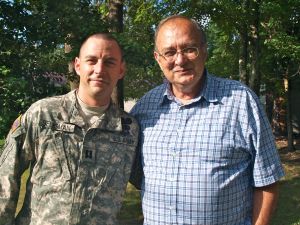
Iraq veteran David Seligman and his father-in-law, Vietnam veteran Paul Sutton have helped each other deal with post-traumatic stress. (Melissa Seligman photo)

“There’s something so horrible about somebody being so traumatized … there’s no emotion attached,” Seligman says. “My dad would talk like that. My entire insides would shake until I didn’t know what to do.”

She eventually realized that the post-traumatic stress that had haunted her father now dogged her husband.

Hundreds of thousands of military families face similar dilemmas as combat troops suffering from PTS come home, attempt to get jobs, reintegrate into society, mend fractured personal relationships and get help from VA’s overwhelmed mental health care system. It’s a dilemma that reopens invisible wounds for Vietnam veterans who don’t want today’s generation to endure the same mistreatment they faced when they came home from war. It’s also a cautionary tale for a nation too often insulated from the mental-health consequences of wartime military service. The Vietnam experience demonstrates that the price of not treating PTS is paid in suicide, substance abuse, homelessness, unemployment, divorce and domestic violence.

“We’re sending our people over there with a very high risk they will come back with psychological problems, and we’re not prepared,” says Susan Selke, whose son, Marine Corps veteran Clay Hunt, committed suicide after battling PTS and survivor’s guilt.

“Substantial unmet need for care.”

Some 300,000 Iraq and Afghanistan veterans – nearly 20 percent of returning troops – are coming home with PTS or depression, according a 2008 study by the RAND Corporation, a nonprofit research group. Roughly half have sought treatment from VA. There is “substantial unmet need for care,” RAND reports.

This spring, a federal appeals court declared VA’s mental-health care system broken, and ordered a lower court to find a way to end delays in care delivery that may be costing veterans their lives. Nearly 86,000 veterans were languishing on VA waiting lists for mental-health care as of April 2008, “a number that may significantly under-represent the scale of the problem both then and now,” the 9th U.S. Circuit Court of Appeals said. The court blamed gross inefficiency, not a lack of funding, for VA problems that leave veterans “suffering and dying, heedlessly and needlessly.”

Statistics, however, only capture a snapshot in time, says Dr. Julie C. Chapman, director of neuroscience at VA’s War Related Illness and Injury Study Center in Washington. It may be years, or even decades, before the mental-health toll of the current wars is known. “Symptoms can submerge and then re-emerge many years later, sometimes during stress or life change.”

“Knowing what war  is all about … it was hard for me to see him go through that.”

The Vietnam nightmares grew steadily worse for Melissa Seligman’s father after his son-in-law, David, began deploying to Afghanistan and Iraq in 2003. “Knowing what war is all about, it was hard for me to see him go through that,” says Paul Sutton. “You live with it for the rest of your life.”

Sutton joined the Air Force on his 17th birthday, and went to Southeast Asia 18 months later. He served four months rescuing downed U.S. pilots, and another year with a unit that provided air-to-ground radio support for allied forces. Coming home in 1966 was worse than he imagined. He says the civilian world either hated him, didn’t understand him, or both.

“There was no support and no appreciation at all for serving my country,” Sutton says. “I did not want to be around anyone. It is still hard for me to be around people.”

He returned home to Kentucky, where he raised his daughter in the outdoors – canoeing, flying and rappelling. She learned to sit quietly with him for hours, seeing things in her father she did not understand. “I knew the war had impacted him,” she says. “But I didn’t have any words to describe it.”

She remembers how his jaw would clench and he would go silent whenever he saw a photo of a buddy from Vietnam. She remembers his startled reactions whenever she touched him.

She remembers telling the story of a little Vietnamese girl who visited his camp. He gave the girl candy and invited her back. She returned with a grenade, pulled the pin, and blew herself up. A few years ago, Seligman’s father told her the rest of the story, the part that most torments him.

“He sat there and cried and said, ‘I did that to her.’”

“I was getting eaten alive by things I didn’t understand.”

When U.S. troops returned from Vietnam, America largely failed to welcome them home and could not grasp the magnitude of their mental wounds. Ken Jones felt no connection to life in the States when he came home in 1968 after a year as a scout-squad leader with the 11th Cavalry. He wanted to return to Vietnam, where he understood his place. “You come to the question of core identity,” Jones says. “There’s a cultural displacement when you come back and realize, in a very short time, the place you thought of as home no longer exists.”

Eight months later, Jones started suffering severe anxiety. His blood pressure skyrocketed. “I was getting eaten alive by things I didn’t understand,” Jones says. The trip-wire anger he unintentionally brought home from Vietnam had one benefit: it triggered adrenaline rushes that vanquished his bouts of depression.

Jones threw himself into his work as a financial adviser and pension-management consultant. He went running at night to exhaust his demons. In the late 1970s, he started writing about his nightmares, which became the basis for his book “When Our Troops Come Home.”

Thom Paca unraveled before he left the war zone. Nine months into his tour as an infantry-weapons squad leader, he “whipped a fellow pretty good with a machine gun,” told off his lieutenant and fled into the jungle. Paca’s buddies tracked him down and persuaded him to return. His commander decided he had battle fatigue, and shipped him to Japan for a psychiatric evaluation.

“I was found ‘physically fit but not responsible for my actions,’” Paca says. That was all the mental-health treatment he received. He returned to Vietnam and spent the last three months of his deployment confined to camp without a weapon. He finished his Army hitch stateside, and left the minute his discharge papers were signed, declining to stay even one extra day for a medical evaluation.

Thirty years, two failed marriages and a string of jobs later, Paca was diagnosed with PTS after a fellow Vietnam War veteran encouraged him to get help. Today anxiety, mood swings and stress are straining his third marriage. “I tell him we have a 50-50 chance,” Paca’s wife, Sharon, says. “But we’re still trying.”

Such stories are familiar to retired nurse Arlene Lynch, who worked with Vietnam War veterans in the Seattle VA Medical Center psychiatric ward in the late 1990s.

“These were kids who should have been driving around in cars looking at girls” instead of going into combat, Lynch says. “They didn’t know what to do with the rage and the anger. It’s no surprise they melted down.”

Coming home to a nation that didn’t want to hear about the war exacerbated the trauma. “They learned to keep their heads down and their mouths shut,” Lynch says. “But they couldn’t keep all that stuff inside. It manifests itself in suicide, drinking, drug abuse, murders, not being able to do jobs or keep relationships. It was common knowledge among the guys on the psych unit at the VA that twice as many Vietnam vets died from suicide as died in battle.”

Indeed, Jones thought he was going to kill himself or go crazy when he finally went to a VA vet center in Anchorage in 1980. He showed some of his Vietnam writings to a counselor, who read six pages and told him, “You’ve come to the right place. We speak this lingo.” Even then, it would take years of work for Jones to get a handle on his stress, depression and anxiety.

“We said, ‘We don’t know what we are, but we aren’t that.'”

The medical community had trouble understanding what Vietnam veterans were going through, even though references to combat trauma and survivor’s guilt date back to Homer’s account of the Trojan Wars. They met with everything from skepticism to misdiagnosis to ridicule.

“One of the most important contributions of Vietnam veterans was they refused to accept the diagnosis of paranoid schizophrenia from VA or civilian doctors,” Jones said. “We said, ‘We don’t know what we are, but we aren’t that.’”

Similar symptoms may have caused confusion, Chapman says. “One of the potential diagnostic criteria for schizophrenia are hallucinations. A soldier’s description of flashbacks might have led a clinician to consider hallucinations, associated with schizophrenia. Similarly, when an individual is exhibiting strong hypervigilance, it might look like paranoia – particularly before PTSD was well-understood.”

The experience of Vietnam veterans brought post-traumatic stress to the attention of the medical community and the nation. “Although combat exposure increases the risk of PTSD in any conflict, a greater number of veterans of the Vietnam War experienced PTSD than have been identified in other conflicts,” Chapman says. “Awareness was raised, and attention was focused.”

The American Psychological Association recognized post-traumatic stress disorder as a distinct diagnosis in 1980. Three years later, Congress mandated a government study on the prevalence of the condition. The National Vietnam Veterans Readjustment Study found that 15 percent of the war’s male veterans had PTS, compared with 5 percent of the civilian population.

Fourteen years later, 1,400 Vietnam combat veterans who belonged to The American Legion participated in a follow-up study that showed that PTS had dropped only slightly over that time. “It was important to characterize the lifetime course of this condition – whether it would resolve, remain, or reappear periodically, to what degree, and in what form,” Chapman says.

The Legion follow-up study also found that Vietnam veterans with PTS experienced higher rates of divorce, cardiovascular disease, fatigue and compromised immune systems. “The distinction between physical health and mental health is artificial,” Chapman says.

While society and the medical community were coming to terms with PTS, small groups of Vietnam veterans began to meet in informal gathering spots, such as the empty room above the Flower and Dragon restaurant in San Francisco. At first, no one spoke. “They didn’t have a word for what they were experiencing,” Jones says. “They drew strength from each other. At least they knew they weren’t alone.”

That informal effort gave rise to the storefront Vet Centers – later adopted by VA – that would help Paca, Jones and many other Vietnam veterans manage the trauma that followed them home from war. “The tag line,” Jones says, “was ‘Help without Hassles.’”

“You are freaked out until the next thing happens that freaks you out more.”

Thirty years later, Oregon Army National Guard veteran Jeff McDowell turned to the Vet Center in Eugene, Ore., for help dealing with his brutal combat tour in Baghdad. His counselor, the son of a Vietnam veteran with severe PTS, quickly concluded that McDowell also had the condition.

McDowell’s scout platoon conducted approximately 270 missions during its year in downtown Baghdad. That included investigating IED blasts and providing security for government ministries and hotels, as well as occasional forays into Baghdad neighborhoods. “We’d go to check something out, hear a big boom, and just keep going, mission to mission,” says McDowell, who served as platoon sergeant during a 2004-2005 deployment.

Enemy identification was mind-bending for U.S. troops who patrolled Iraq, as it was for those who fought in Vietnam. Insurgents and civilians dressed alike. The rules of engagement changed rapidly. “You are freaked out until the next thing happens that freaks you out more,” McDowell says. “Three-hundred and sixty-five days of that, and you fly back home.”

Like Vietnam veterans, soldiers returning from Iraq and Afghanistan often feel out of place when they try to return to civilian life, so they return to the military and re-enter the war. Job-hunting is arduous. Relationships can be impossible.

“We did an unofficial poll of 300 or 400 soldiers who went over with us,” McDowell says. “We had an 86-percent divorce rate. I can count on two hands the number who don’t have at least one divorce. Some had two, some three.”

McDowell was 40 when he came home from his deployment. The transition was difficult. His contracting business had withered. He was short-fused with his wife and children. He no longer cared about hunting and fishing, which he had loved before his deployment. “I lost my joy,” McDowell says. His wife encouraged him to get help, and he’s parlayed that into a career helping others.

After retiring from the National Guard in 2007, McDowell entered a master’s program in counseling to assist other veterans. “I started seeing some of my guys fall apart,” he says. “I felt responsible for them. I thought, if I can figure some of this stuff out for myself, maybe I can figure it out for the other guys.”

He’s already seeing veterans as part of an unpaid internship with a private, nonprofit counseling group. He hopes to put his skills to work at the Eugene VA Vet Center.

McDowell made careful choices. He got counseling. He participated in a neuro-feedback treatment program. He also decided to never carry a weapon of any kind, knowing that he couldn’t shut off his combat instincts.

“You start thinking about the things you did, the way you reacted, the training you got, and you know you are not the same person,” McDowell says. “I spent a lot of time thinking about this … about whether I was going to like this (new) person.”

Families struggle with their own stresses caring for loved ones with PTS. “A lot of times, spouses become the sponges,” Melissa Seligman says, “and have nowhere to release it.” They often face their own secondary PTS.

Seligman started convulsing when her husband described the carnage from that suicide bombing in the same flat, emotionless tone her father used to tell his story about the helicopter gunner losing a leg in Vietnam. David had the same startled reaction as her dad when Selignam touched him. And he exploded with anger for no apparent reason. It would be three years, including another combat deployment and a year at Officer Candidate School, before they could confront his PTS.

Like most military spouses, Seligman was reluctant to seek help for herself, worried that she would be taking resources from people in greater need. Then she came across Ken Jones on Twitter, and started talking to him about her experiences with her husband and her father. Not only was Jones a Vietnam combat veteran, but he had grown up in the shadow of his own father’s World War II post-traumatic stress.

“For the first time, I had a translator,” she says. “Ken Jones opened up the world for understanding both men.”

Understanding David’s triggers helps her to realize that his reactions aren’t personal, to negotiate the difficult moments, and to foster his relationship with their children.

Soon, Seligman and Chris Piper – who together co-founded the “Her War, Her Voice” blog – were recording their conversations about combat stress and military families with Jones and posting them on the Internet. David Seligman decided to seek counseling after hearing just one of those conversations.

Even this victory comes with caution, a question about whether too much healing will dull the edge that keeps her husband alive. “To an extent, I need David to stay trigger-ready,” Seligman says. “I need him to be numb to the horrors of war. Because without that numbness, he may make mistakes.”

Inspired by his son-in-law and encouraged by his VA doctor, her father started getting help for his PTS a year ago. Seligman is relieved that the most important men in her life are healing; she no longer shakes when they talk about the events they witnessed. Still, she wishes she had the power to reach into the past and find a way to end her father’s nightmares.

“I always wanted him to be better,” Seligman says. “As a wife and mother, it makes me wonder how I could have changed things if I had just asked him. I wonder who he would have been if someone had listened.”

This story is part of a special series about post-traumatic stress titled The War Within that appears in the September 2011 edition of  The American Legion Magazine.

Posted in Uncategorized | Tagged , , , , , , , , , , , , , , , , | Leave a comment

Brown Water Update: VA updates list of Vietnam Navy ships exposed to Agent Orange

By Ken Olsen

(Copyright 2011/ All Rights Reserved) 

The VA has finally posted an expanded list of U.S. Navy ships exposed to Agent Orange during the Vietnam War. The so-called Brown Water ships list comes a year after U.S. Sen. Daniel Akaka, D-Hawaii chided the agency for failing to obtain key military records that showed sailors on the ships were presumed exposed to the toxic herbicide.

The updated list — which is not complete — was supposed to be available Aug. 1. The agency has not offered an explanation for the delay.

Akaka’s staff found hundreds of cases in which VA regional offices across the country did not request the deck logs from the National Archives before rejecting Agent Orange claims from  Vietnam Navy veterans.  The senator, then chairman of the Senate Veterans Affairs Committee, asked VA to review the cases of sailors whose claims appear to have been inappropriately rejected.

VA expanded the list of oceangoing Navy vessels presumed to have been exposed to Agent Orange from 150 to 170 ships, in part because of information Akaka’s staff provided.

As of April, the VA had reexamined about 6,700 of the 16,820 cases Akaka called to the agency’s attention, said Tom Pamperin, deputy undersecretary for disability assistance. Many will receive disability compensation and medical care for illnesses connected to Agent Orange exposure. VA has not said when it will complete its review of all 16,820 cases.

For the full story see Brown Water Bungle: Paperwork error excluded hundreds of Vietnam Navy veterans from receiving Agent Orange Benefits.

Ken Olsen is a frequent contributor to The American Legion Magazine, where the story about the Brown Water Bungle first appeared.  For other stories and information about U.S. veterans and Agent Orange exposure see these other Veterans Voices stories: Brown Water Bungle: Paperwork error excluded hundreds of Vietnam Navy veterans from receiving Agent Orange Benefits;  Sailors Adrift: The Lingering Tragedy of Agent Orange  and Still Adrift as well as Toxic Legacy: A Brief History of Agent Orange Exposure in Vietnam.

Posted in Uncategorized | Tagged , , , , , , , | 22 Comments

The War Within: Special Report on Post Traumatic Stress featured on WERE 1490 AM

More than 300,000 Iraq and Afghanistan veterans – nearly 20 percent of returning troops – have PTS or depression and the number is rising. Their experiences, and they way they  resonate with Vietnam veterans, are part of a special report in the September issue of The American Legion Magazine titled “The War Within.” WERE 1490 in Cincinnati recently featured “The War Within.” Catch the podcast here.

Posted in Uncategorized | Tagged , , , , , , , , , , , | Leave a comment

Brown Water Bungle: Paperwork error excluded hundreds of Vietnam Navy veterans from receiving Agent Orange benefits

By Ken Olsen

(Copyright 2011/All Rights Reserved)

Hundreds of Vietnam Navy veterans whose Agent Orange claims were denied because the VA failed to obtain key military records will receive benefits as a result of a review requested by U.S. Sen. Daniel Akaka, D-Hawaii.

As of April, the VA had reexamined about 6,700 of the 16,820 cases Akaka called to the agency’s attention, said Tom Pamperin, deputy undersecretary for disability assistance. Many will receive disability compensation and medical care for illnesses connected to Agent Orange exposure.

The agency could not provide a precise estimate of how many Navy veterans will benefit from the review, or the basis for reversing its earlier denial of the claims. And another 10,200 cases must still be re-examined. VA is, however, expanding the list of oceangoing Navy vessels presumed to have been exposed to Agent Orange from 150 to 170 ships, in part because of information Akaka’s staff provided.

Last September, Akaka – then chairman of the Senate Veterans Affairs Committee – asked VA to reconsider claims from veterans who served in Vietnam’s rivers and inland waterways, or who docked in Vietnam. That makes them “Brown Water” veterans, presumed to have Agent Orange exposure, provided they can document where they served. Akaka also identified a group of veterans who may have been exposed to the toxic herbicide on the perimeters of Air Force bases in Thailand.

The U.S. military used an estimated 20 million gallons of the dioxin-based herbicide during the war. Congress passed the Agent Orange Act of 1991 to provide disability compensation and medical care for Vietnam War veterans who developed diseases linked to Agent Orange. But the Bush administration quietly changed the rules in 2002, and required veterans to prove either that they had stepped foot in Vietnam – the “boots on ground” requirement – or that they were Brown Water veterans. Bush also stripped Agent Orange compensation from Navy and Air Force personnel who had approved claims and were receiving benefits, but lacked proof of boots on ground.

Meanwhile, thousands of Vietnam Navy veterans applied for Agent Orange benefits as Brown Water veterans. Proving such a claim typically requires a deck log from the veteran’s ship, showing that it entered Vietnam’s inland waters or docked. VA is usually required to examine a ship’s deck logs when a veteran files an Agent Orange claim and provides approximate dates that the ship was on Vietnam’s inland waterways, says Rick Spataro of the National Veterans Legal Services Program, which has represented Agent Orange-afflicted veterans since the 1970s.

That often doesn’t happen, veterans say. Indeed, Akaka’s staff found a significant number of cases in which VA regional offices across the country did not request the deck logs from the National Archives before rejecting a claim. While VA cannot yet say how many of the 16,820 cases lacked the necessary records check, “it was of sufficient concern that it was appropriate for us to conduct a review,” Pamperin says.

The complete review will take several more months because VA personnel have to pull each claims file, determine if the deck logs were requested, and search for other evidence of Agent Orange exposure. At the same time, VA is dealing with an unprecedented number of claims from veterans of the Iraq and Afghanistan wars, requests from Vietnam veterans for benefits based on the three diseases recently added to the list of recognized Agent Orange-related illnesses, and other claims, Pamperin says.

These are reasons for The American Legion to organize a group of volunteers to comb the deck logs housed in the National Archives near Washington, says Charles Yunker, adjutant of the Legion’s Department of Kansas. That would speed claims processing, and provide a more accurate review of the information needed to back a claim.

“With all the pressure and workload on VA, they are apt to miss something in the deck logs that would qualify a ship under today’s standard,” Yunker says. “Therefore, I think true veterans advocates are better suited to comb deck logs.”

Yunker, a radarman on USS Lloyd Thomas during the war, began searching for his ship’s deck logs two years ago to help the growing number of his shipmates with Agent Orange-related illnesses.

Having volunteers help find and interpret deck logs appeals to Denise Ross, who paid hundreds of dollars and waited months for the National Archives and a private research service to find the deck logs for her husband’s ship. “It is just one of many things that deter the veteran from having his case VA-ready,” Ross says. “Once we learned how and where to find the logs, we waited to receive them, then it was months of learning how to read them and what different locations meant.”

VA confirms that Navy veterans who present deck logs with their claims should see a faster resolution. “It cuts out a major chunk of (claim) development time,” Pamperin says. With proof of service in Vietnam’s inland waters or time on shore, “the only issue is, ‘What disability do you have?’ and ‘What’s the current level of (that) disability?'”

This story appeared in the August 2011 issue of The American Legion Magazine.
Please note: VA still has not posted an updated list of oceangoing U.S. Navy vessels presumed to have been exposed to Agent Orange. The list of so-called Brown Water ships should be available at VA’s website sometime in August, VA officials said Aug. 2, again pushing back the date for releasing the information. The VA began updating the Brown Water list a year ago. In April, the agency said it was expanding the list from 150 ships to 170 ships. However, VA has so far refused to make the new list public.

For other stories and information about U.S. veterans and Agent Orange exposure see these other Veterans Voices stories:  Sailors Adrift: The Lingering Tragedy of Agent Orange  and Still Adrift as well as Toxic Legacy: A Brief History of Agent Orange Exposure in Vietnam.

Posted in Uncategorized | Tagged , , , , , , , , , , , , | 3 Comments

Toxic Legacy: A brief history of Agent Orange in Vietnam

• 1961 to 1972: U.S. military sprays some 20 million gallons of Agent Orange and other herbicides across Vietnam and some parts of Laos under Operation Ranch Hand.

• 1968-69: U.S. Military uses Agent Orange in Korean DMZ, exposing an estimated 12,000 veterans.

• Early 1970s: Veterans begin complaining of strange skin lesions called chloracne and other health problems as well as a spike in birth defects in their children. VA requires proof of exposure from anyone filing a claim for benefits.

• 1982: VA decides that Vietnam veterans with chloracne are presumed to have been exposed to Agent Orange.

• 1984: Congress orders VA to assemble a scientific committee to draft regulations to provide medical care and benefits to Vietnam veterans who can prove they were exposed to Agent Orange. The VA’s committee says only veterans with chloracne should qualify.

• 1986National Veterans Legal Services Program files suit challenging VA’s “chloracne only” rule. It wins the case in the U.S. District Court for the Northern District of California.

•  1990: U.S. Centers for Disease Control and Prevention issues its Vietnam Experience Study showing veterans who served in Vietnam War have a far higher rate of non-Hodgkin’s lymphoma than veterans from the same era who didn’t serve in and around Vietnam. The Vietnam Experience Study also concludes that highest incidence of non-Hodgkin’s lymphoma was experienced by military personnel who served on ships off the coast of Vietnam.

• 1991: Congress Passes the Agent Orange Act of 1991 stipulating that any veteran who served in Vietnam from Jan. 9, 1962 to May 7, 1975, is presumed to have been exposed to Agent Orange and automatically qualifies for disability rating and medical care for a list of specified diseases.

• February 2002: Under the direction of the Bush Administration, VA changes its rules to require Navy and Marine veterans who served on ships to prove they also had “boots on ground” in Vietnam in order to qualify for Agent Orange benefits.

• 2002: Alarmed at higher than normal rates of cancer in its sailors who served in Vietnam, the Royal Australian Navy publishes study showing distilling water on Navy ships magnifies the concentration of dioxin – a key toxic ingredient in Agent Orange.

• 2004: VA denies an Agent Orange claim for Jonathan Haas, a retired Naval commander who served on an ammunition tender in Vietnam who has Type 2 diabetes and kidney problems. Both illnesses that can be caused by Agent Orange exposure.

• 2006: The Australian government authorizes benefits for their Blue Water Navy veterans from Vietnam War.

•   2006: Represented by the National Veterans Legal Services Programs, Haas wins his case at the Court of Appeals for Veterans Claims. The court’s ruling would have required VA to process all Blue Water veterans’ claims as if they were presumed to have been exposed to Agent Orange. The VA ultimately wins a temporary stay of the Court of Appeals for Veterans Claims ruling and appeals to the U.S. Supreme Court.

• 2007: The George W. Bush Administration requests introduction of legislation to eliminate all Blue Water veterans from qualifying for presumptive exposure to Agent Orange. Bush’s Agent Orange exclusion legislation is introduced, but dies in Congress.

• 2008: The Institute of Medicine, an arm of the U.S. National Academies of Science confirms the Royal Australian Navy finding that distilling seawater for drinking water increases dioxin concentration. The VA responds by saying more study is needed.

•  May 2008U.S. Court of Appeals for the Federal Circuit overturns the 2006 Court of Appeals for Veterans Claims ruling in favor of Hass, saying the VA had the right to change its rules for Agent Orange eligibility and exclude Navy and Marine personnel who served on ships off the coast of Vietnam but cannot prove they set foot on land in Vietnam.

•  Oct-Nov 2008: The National Veterans Legal Services Program appeals the Circuit Court decision in the Hass case to the U.S. Supreme Court. The American Legion and other groups file briefs in support of Commander Hass’ case.

•  January 2009: The U.S. Supreme Court refuses to hear the Hass case, effectively upholding the VA’s right to exclude Blue Water veterans. The VA rejects pending claims of  Blue Water Veterans without proof of boots on ground.

•  May 2009: U.S. Rep. Bob Filner introduces HR-2254. Companion legislation introduced in Senate.

•  December 2009: The VA asks the Institute of Medicine to conduct another study of whether distilling Agent Orange tainted seawater increases dioxin concentrations. Results are due the summer of 2011.

• May 2010: U.S. House of Representatives Veterans Affairs Committee holds hearing on the Agent Orange Equity Act. Congress fails to act on the measure and the legislation dies.

• September 2010: U.S. Senate Veterans Affairs Committee holds a hearing on the cost of adding ischemic heart disease, hairy cell leukemia and Parkinson’s disease to the list of illnesses presumed to be connected to Agent Orange exposure. U.S. Sen. Jim Webb, D-Va., who served with the Marine Corps in Vietnam, voices skepticism of such Agent Orange compensation.

• March 2011: U.S. Rep. Bob Filner, D-Calif., re-introduces the Agent Orange Equity Act, H.R. 512, to restore benefits to all Vietnam veterans exposed to the toxic herbicide.

Compiled by Ken Olsen / Copyright 2011

Sources include: National Veterans Legal Services Program, U.S. Department of Veterans Affairs, U.S. Department of Defense

This timeline originally was published as part of a July 2010 story in The American Legion Magazine about the challenges U.S. Navy and Air Force Vietnam veterans face getting VA medical care and benefits for Agent Orange exposure. For other stories about U.S. veterans and Agent Orange exposure see:  Sailors Adrift: The Lingering Tragedy of Agent Orange and Still Adrift

Posted in Uncategorized | Tagged , , , , , , , , , , | 4 Comments

Broken System: Despite 30-year battle, federal court victory, Vietnam veteran’s disability claim remains unresolved

By Ken Olsen

(Copyright 2011 / All Rights Reserved)

Leroy Comer in his garden, spring 2009. (Photo by Alicia Wagner Calzada)

A federal appeals court ruled in his favor two years ago, but Leroy Comer’s decades-long fight for less than $30,000 in VA disability benefits remains mired in the bureaucracy.

Comer, who started pursuing his case in 1988 with handwritten appeals penned in homeless shelters, received a partial settlement of $13,772 in November 2010, along with a note saying that the case couldn’t move forward without information Comer says he provided to VA years ago. In addition, VA withheld some of Comer’s past-due compensation to pay an attorney who withdrew from the case nearly four years ago.

It’s hardly a surprise to the Vietnam War veteran, who has endured years in limbo. He’s frustrated that delays continue even after a federal court ruled in his favor. “I’m tired of them,” Comer says. “I don’t believe they want to make it right.”

Dion Messer, one of two attorneys who represented Comer when his case finally reached the U.S. Court of Appeals for the Federal Circuit, shares his frustration. “I’m completely disappointed that his case hasn’t been resolved, despite the hard work and effort we put into this,” Messer says. “The disability-compensation system is broken. It’s really broken.”

Comer first suffered debilitating flashbacks after coming home from Vietnam in 1970, where he guarded an ammunition dump that was under frequent mortar attack. Unable to keep a job, he lived on the streets, used alcohol and drugs to numb his nightmares, and served time in prison for drug possession and robbery.

VA first diagnosed Comer with post-traumatic stress in 1988, but initially denied it was caused by his service in Vietnam. He spent more than

10 years battling to get the government to acknowledge that his illness was connected to his combat tour. He then spent most of another decade attempting to get VA to grant him a few hundred dollars in retroactive compensation for errantly denying the original PTS claim.

By the time he reached the U.S. Circuit Court in 2009, the last resort for veterans unless their cases are heard in the Supreme Court, Comer was seeking an additional five years of retroactive benefits because a VA doctor concluded in 2004 that PTS prevented him from holding a full-time job. That request failed because Comer didn’t realize he wasn’t filing the correct paperwork.

VA didn’t provide that detail, and convinced lower courts that it wasn’t required to provide such assistance.

Comer’s case caught the attention of Edward Reines and Dion Messer from the law firm of Weil, Gotshal & Manges in February 2008 when the beleaguered veteran handwrote one last appeal to the U.S. Court of Appeals for the Federal Circuit. Reines and Messer took on his case free of charge. In a January 2009 opinion, Appeals Court Judge Haldane Robert Mayer strongly rebuked VA.

“The VA disability-compensation system is not meant to be a trap for the unwary, or a stratagem to deny compensation to a veteran who has a valid claim but who may be unaware of the various forms of compensation available to him,” Mayer wrote. VA is legally required to tell veterans about every possible benefit, and then help them do what’s necessary to receive them – including informing a veteran when he isn’t filing the right paperwork. That sort of assistance is particularly needed in cases such as Comer’s, where “a veteran is afflicted with a significant psychological disability.”

At the end of the day, the government’s interest in veterans’ cases is not winning, “but rather that justice shall be done, that all veterans so entitled receive the benefits due them,” Mayer added. He sent the case back to the Court of Appeals for Veterans Claims.

At the time, Comer and his attorneys were optimistic about the precedent-setting decision. They believed his case would finally be resolved, even though they expected it would take some months for it to work its way back to VA’s regional office in Waco, Texas, for a final decision. In fact, the case still drags on.

Messer left Weil, Gotshal & Manges after it closed its Texas offices in fall 2009, and the case was assigned to Mark Davis, an attorney in the firm’s Washington office. Anish Desai, who is assisting Davis, says it’s been difficult to keep the case moving. “There’s no real clear avenue to speeding things up at VA,” Desai says. “In a case where there’s supposed to be expedited treatment, they should have specific dates by which decisions are made.”

From VA’s perspective, a substantial portion of Comer’s case was addressed by the $13,000 settlement. Beyond that, VA says it’s doing what’s necessary to accurately evaluate his case. “The responsibilities of the highly skilled staff members who process appeals at VA regional offices and the Board of Veterans Appeals include carefully evaluating the credibility, weight and probative value of the often extensive evidence that is submitted in support of appeals,” VA said in an e-mail response to questions about Comer’s lingering claim.

VA also said the $13,772 covers what Comer is owed for his retroactive claim, except for $3,443 in fees it withheld to pay a California attorney who represented Comer on his first appeal to the Court of Appeals for Veterans Claims. The attorney withdrew from Comer’s case after that appeal failed in 2007. The attorney’s firm, the Veterans Law Group, says it will return any payment from VA related to Comer’s case, in keeping with its long-standing policy to not accept fees in cases where it withdrew.

Weil continues to represent Comer pro bono, Desai says. In addition, the law firm was awarded $70,000 in attorney fees by the government for its work on the federal-circuit-court appeal. So it isn’t seeking a portion of Comer’s settlement for legal fees.

Meanwhile, VA also says it has done all it can until Comer provides “a complete history of employment, unemployment and incarceration” required to address the rest of his claim.

VA should have a clear picture of Comer’s work history, attorneys say. “The record contains document after document recording Mr. Comer’s inability to keep a job,” Messer says.

Desai agrees that Comer has provided his work history to VA before, but “it would take longer to figure out why they are asking for it than to give it to them.” That’s not as simple as it might seem, considering Comer lived on the streets for nearly 20 years after returning from Vietnam and hasn’t held a full-time job since 1975 because of his PTS.

For Comer, however, it’s just another day of fighting the bureaucracy. “I think they prolong and prolong and prolong,” he says, “until you get tired and say, ‘To hell with it.'”

This story originally appeared in the March 2011 issue of The American Legion Magazine.

Photo of Leroy Comer by Alicia Wagner Calzada, http://www.aliciaphoto.com/

Posted in Uncategorized | Tagged , , , , , , | Leave a comment

Still Adrift: Congressional inaction sinks hope that ailing Vietnam Navy veterans will regain Agent Orange benefits

By Ken Olsen

(Copyright 2010 / All Rights Reserved)

Ann Langston sent a desperate note to her senator in early June asking for help expediting her husband’s Agent Orange claim. Bruce Langston had suffered an aneurysm after long bouts with kidney failure, heart disease and diabetes. “We don’t have time for formal letters,” she wrote.

VA issued its standard response, acknowledging Langston’s claim and assuring him of its “sincere desire to decide (his) case promptly.” By the time that notice arrived in mid-July, the Vietnam veteran had been dead a month, and Ann was headed for another fight – over $600 in funeral benefits.

“I wanted to shout at the VA,” she says. “Twenty years of military service, and you didn’t stand behind him.”

This sense of heartbreak and disappointment defines the Blue Water veterans community, which lost hundreds of men to Agent Orange-inflicted diseases in 2010 and watched Congress go home without restoring the VA medical benefits the Bush administration eliminated in 2002.

“We’ve lost so many this past year,” says Denise Ross, whose husband, Robert, is fighting to stay alive while his Agent Orange claim plods through the appeals system. “And the ones remaining – their lives are taken over by the illnesses. They are losing their homes, they are dying. It’s over.”

Indeed, Ann Langston’s husband, who served on USS Takelma from June to December 1968, begged her to give up. “Before he died, he told me, ‘Honey, don’t do any more. You know the government isn’t going to do anything.'”

Final Push

One of the most devastating losses was that of Thomas J. Laliberte, president of the Veterans Association of Sailors of the Vietnam War (VASVW). Laliberte served on USS Constellation in the Gulf of Tonkin. He was healthy until he was hospitalized with multiple myeloma and kidney failure in 2006, he told The American Legion Magazine last spring. VA recognizes multiple myeloma as an Agent Orange-related disease. Yet his claim was denied, because he was a Blue Water veteran – a sailor who cannot prove that he stepped foot in Vietnam or otherwise had direct exposure to the toxic herbicide. Laliberte lost his job and his marriage after becoming ill, and by the time he died in August, he was living in a friend’s guest bedroom and getting by on state assistance. His dream was to become self-sufficient again.

“Tom’s life is a classic representation of what all of the Blue Water veterans are facing,” Ross says. “His death took the wind out of all of our sails. It ended all of our optimism.”

Laliberte, Ross and the other Blue Water veterans bet their waning optimism and energy on getting the 111th Congress to take action. The American Legion, VASVW and other veterans groups pushed legislation to restore Agent Orange benefits to anyone who served in Vietnam, whether on land, in the air or at sea.

Former House Veterans Affairs Committee Chairman Bob Filner, D-Calif., stressed the urgency of passing the bill in a letter to his colleagues. “Congress’ original intent was to provide these veterans with benefits based on their exposure to Agent Orange and other deadly herbicides, regardless of arbitrary geographic line-drawing,” Filner wrote before losing his chairmanship when the majority shifted in the House after last fall’s elections.

The Agent Orange Act of 1991 made it clear that all Vietnam War veterans were presumed to have been exposed to the toxic herbicide, and should receive VA benefits for illnesses linked to it. There was good reason for that approach. The U.S. military sprayed 20 million gallons of Agent Orange in Vietnam and Laos to clear the dense jungle where the enemy took cover, as well as to destroy enemy crops and clear areas for U.S. firebases. The spray drifted into rivers, was carried out to sea, and mixed with the seawater that Navy ships distilled for drinking water, cooking, bathing and running the boilers. The distillation process increased the concentration of dioxin, according to a post-Vietnam study by the Royal Australian Navy. The Institute of Medicine, an arm of the National Academies of Science, later confirmed that finding.

The consequences of the decade-long Agent Orange spraying program began appearing in the 1970s, when veterans reported troubling skin lesions and an increase in birth defects among their children. After considerable court fights and controversy, the chemical’s manufacturers settled a class-action lawsuit with veterans. By 1990, the U.S. Centers for Disease Control and Prevention reported that a greater percentage of Vietnam War sailors developed non-Hodgkin’s lymphoma than veterans who served with ground forces. A year later, Congress authorized Agent Orange benefits and directed the National Academy of Sciences to come up with a list of diseases connected to toxic exposure.

VA restricted the type of servicemembers who could qualify for Agent Orange coverage in the years after the 1991 legislation passed, says Jeff Davis, founder of VASVW. Then, in 2002, the Bush administration quietly implemented rules that require veterans to prove they had stepped foot in Vietnam – the “boots-on-ground” requirement – to qualify for Agent Orange benefits. Even veterans with approved claims, who were being treated for diseases like trachea cancer, were stripped of their benefits, according to the National Veterans Legal Services Program, which has represented Agent Orange-afflicted veterans since the 1970s. That included Blue Water veterans, who served in Vietnam’s territorial waters, and Blue Sky veterans, who flew combat and reconnaissance missions.

An appeals court ultimately upheld the Bush administration’s decision, even though VA had skirted the formal rule-making process. The Agent Orange Equity Act before the 111th Congress would have restored benefits for anyone with a Vietnam Service Medal or a Vietnam Campaign Medal. Buoyed by the hope that they could get at least a little help for the medical bills they were bequeathing their families, hundreds of Blue Water veterans wrote and called congressional offices. Davis and other veterans met with dozens of congressional staff on Capitol Hill.

Summer Stall

Unfortunately, the effort stalled as Congress started scrutinizing VA plans to recognize Parkinson’s disease, hairy cell leukemia and ischemic heart disease as illnesses linked to Agent Orange exposure. To the surprise of his fellow veterans, one of the leading skeptics was Sen. Jim Webb, D-Va., who served with the Marines in Vietnam. Webb asked that the Institute of Medicine revisit its 2007-2008 study that recommended adding the three diseases and restoring benefits for Blue Water veterans. The results won’t be released until this summer.

Webb and other members of the Senate Veterans Affairs Committee also grilled VA Secretary Eric Shinseki over the wisdom and cost of adding ischemic heart disease to the illness list at a hearing in September. Blue Water veterans are convinced that controversy helped kill their bill. Webb’s office defends the senator’s work as reasonable skepticism.

“Sen. Webb has spent his entire adult life, one way or another, involved in veterans law and assistance, and he takes a back seat to no one in concern for our veterans,” says Will Jenkins, Webb’s press secretary. “His concerns about Agent Orange benefits centered on maintaining the integrity of our disability-compensation system and improving the presumptive decision-making process, in order to follow the law and ensure we adequately compensate and care for all veterans whose illnesses are service-connected.”

By the time Shinseki was defending VA’s new Agent Orange presumptions, Blue Water veterans were hearing that efforts to restore their benefits were dead because the price tag was too high. In 2009, VA estimated it would cost $27 billion to restore medical and disability assistance for sailors and airmen exposed to Agent Orange in Vietnam, as well as for servicemembers stationed in Thailand, Laos, Cambodia and a South Pacific island where leaking drums of the herbicide were stored, Davis says. He estimates that the true cost is closer to $3 billion, considering that less than half of the 229,000 Blue Water veterans are still alive to apply for benefits.

Denise Ross, whose husband served on USS Vega, sees more than money in this controversy. “I feel like people say we’re lying about the relationship between Agent Orange exposure and the war, even though we give them evidence. I feel like they say we want to be freeloaders. They don’t realize that our fathers’, husbands’ and brothers’ lives are cut short – that they lose everything – because of the illnesses.”

Brown Water Reprieve

There was some positive news for Vietnam War Navy veterans in 2010. In late September, VA agreed to review the cases of 17,000 sailors who served in Vietnam’s rivers and inland waterways – so-called Brown Water veterans – at the urging of Senate Veterans Affairs Committee Chairman Daniel Akaka, D-Hawaii. The claims had been denied without VA obtaining relevant military records, including the deck logs of the veterans’ ships, Akaka’s office said.

Even that presents a difficult burden for veterans. “VA says it gets Brown Water Navy information from the Navy,” says Charles Yunker, adjutant of The American Legion Department of Kansas. “But no one knows who you go to in the Navy to get information and what information you need. They could at least publish the rules or tell us how to get on the Brown Water Navy list.”

Yunker served as a radarman on USS Lloyd Thomas during Vietnam. The destroyer’s missions included inserting Australian special forces near a river a few days after Christmas 1970, and some of his shipmates are suffering illnesses directly linked to Agent Orange exposure. Because of the clandestine nature of that and other missions, however, it’s difficult to produce the evidence VA requires as Legion service officers help them file claims. “I get very frustrated the way veterans are treated by the government and many politicians,” Yunker says.

In early December, VA also announced that it had processed 28,000 claims for the three new Agent Orange presumptions in six weeks, using a new system. Veterans laud VA’s efforts to improve the claims-processing system but note that the recent effort does not address the plight of Blue Water veterans, who remain unable to get benefits unless Congress passes the legislation or the Obama administration reverses the Bush administration’s rule change.

“It’s a little uncomfortable that Secretary Shinseki used the Institute of Medicine statements to back his decision to add those illnesses, yet he will not consider that the IOM also recommended that the Blue Water Navy be covered by the rules of presumptive exposure,” Ross says. “The rest of us will still be stuck in the system of trying to prove exposure to Agent Orange.”

Retrenching

Despite all of the setbacks, Blue Water veterans and their survivors aren’t surrendering. VASVW’s Davis, for one, believes that the Agent Orange Equity Act “will be back in some form or another” and that the next House Veterans Affairs Committee chairman will push the bill. “We’ve had very good bipartisan support in the House,” Davis says.

Success will require scaling back legislation, to restore benefits only to veterans who served in Vietnam’s territorial waters, Thailand, Laos and Cambodia, and the Blue Sky Air Force, Davis says. Additional legislation can then be introduced to provide Agent Orange benefits for veterans exposed to Agent Orange outside the Vietnam theatre, including servicemembers who dealt with leaking drums of the toxic herbicide stored on Guam, Okinawa, Johnston Island in the South Pacific and other locations.
“I’m hopeful that people will realize their promise to leave no one behind leaves everyone behind,” Davis says of the more comprehensive bill that failed in the last Congress.

Laliberte’s daughter, Jennifer Carlstrom, and her husband joined VASVW to take up the fight in his stead. “These benefits would have been a huge help to my dad, and possibly could have afforded him the opportunity to get more help in living with his disease,” Carlstrom says. “I hope the bill can be passed so other families do not have to suffer as my dad did and our family has.”

Ann Langston will also continue to work on behalf of Blue Water veterans as she pursues her late husband’s Agent Orange claim and works to get VA to reimburse $600 of his burial expenses. That seemingly small amount is important, considering she still owes $6,000 on her husband’s funeral bill, is behind on her house payment, and is dealing with her own health concerns, including a second brain tumor in two years.

Meanwhile, Langston is being asked to prove that her husband’s diabetes, heart and kidney diseases were related to Agent Orange exposure to get help with his burial expenses. She is frustrated, but determined.

“I’m not going to give up,” Langston says. “I’ve got God. I’ve got my family. And if this means other veterans don’t have to go through what these Blue Water sailors are going through, then it’s worth it.”

This story appeared in the March 2011  issue of The American Legion Magazine. Read other stories by Ken Olsen about Vietnam veterans who are battling to regain their Agent Orange benefits including Sailors Adrift.


Posted in Uncategorized | Tagged , , , , , , , , , , , , | 5 Comments

Frank Buckles, last surviving U.S. World War I veteran, dies at age 110

By Ken Olsen

(Copyright 2011 / All Rights Reserved)

Frank Buckles, the last living U.S. World War I veteran among the 4.7 million who served– and the last survivor of that conflict’s brutal Western Front – died February 27 at his small West Virginia farmhouse. He was 110.

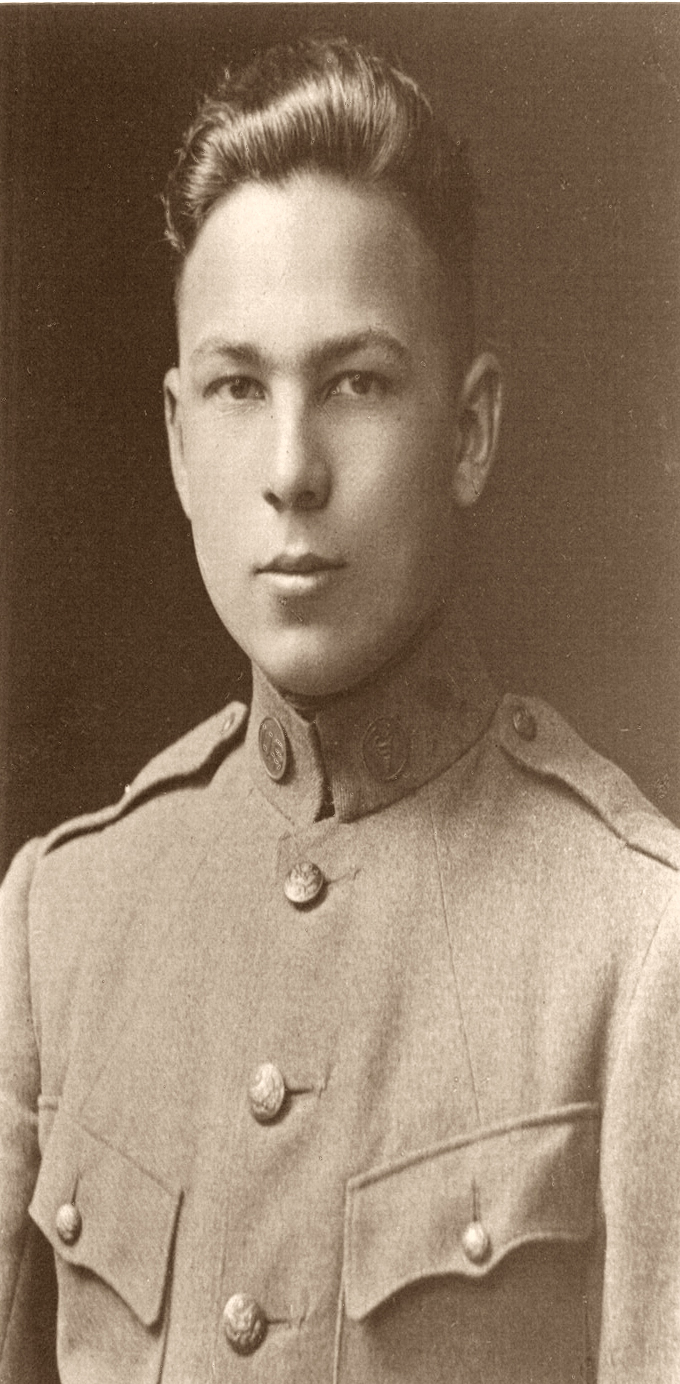
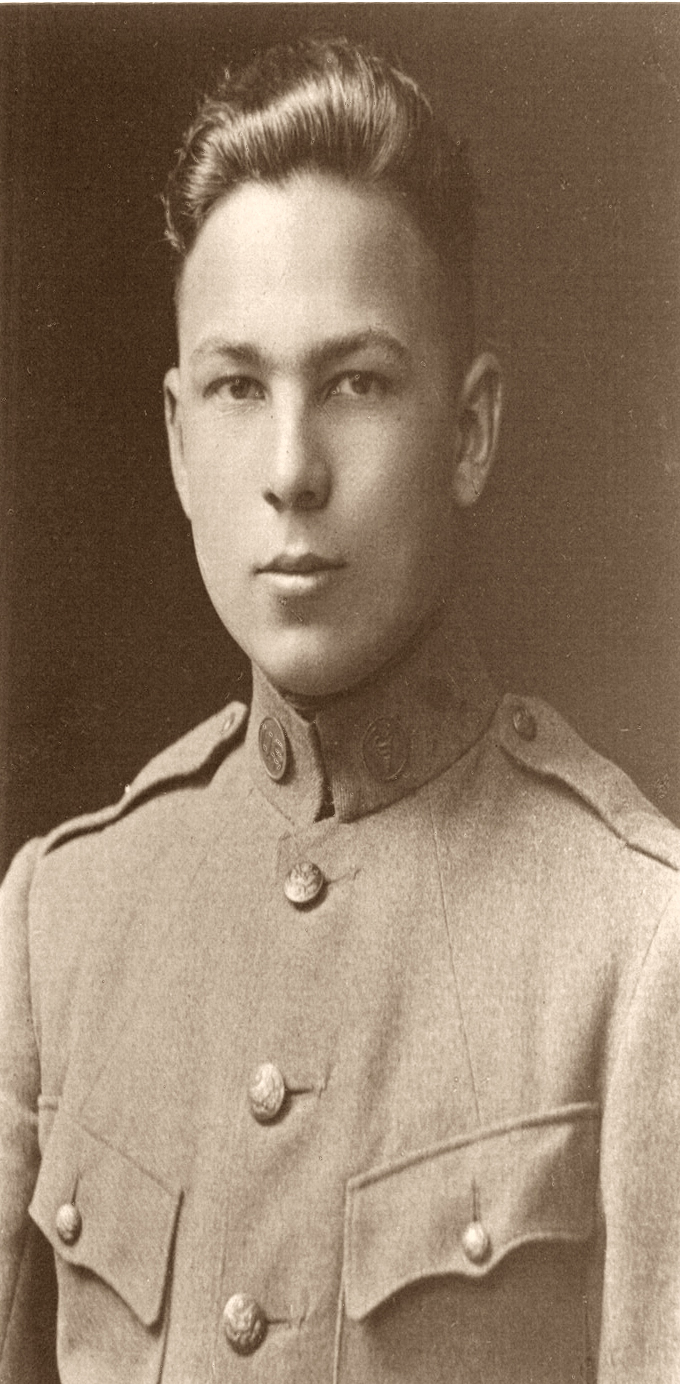
Frank Buckles, age 16, shortly after joining the Army in 1917

Buckles’ storied life – forged as a Missouri farm boy, Army ambulance driver, international ship’s purser and freight expediter, and World War II prison camp survivor – was harrowing, inspiring, courageous and historic. He survived the Spanish Flu pandemic, witnessed black U.S. track and field star Jesse Owens win a gold medal at the 1936 Berlin Olympics, and bumped into Adolf Hitler on the stairs of a German hotel during the dictator’s rise to power. He was the last of the generation of soldiers that founded The American Legion and the oldest person to ever testify before Congress.

“He’s Forrest Gump with class and IQ,” says photographer David DeJonge, referring to a 1994 fictional movie character who witnesses the 20th century’s most important events. “He’s lived half of American history. He’s the last man of 70 million combatants in the world who witnessed the Western Front (during World War I). He’s brushed elbows with some of the most significant people in history.”

Buckles was aware of his place in history. “I always knew I’d be one of the last because I was one of the youngest when I joined,” Buckles said in his interview with the New York Daily News, after he became the last surviving member of those 4.7 million.

“But I never thought I’d be the last one.”

Buckles also died disappointed that Congress failed to create a National World War I Memorial on the National Mall in Washington, D.C., in honor of the millions of Americans who helped defeat Germany. He did live long enough to see a significant refurbishing of the memorial on the National Mall that pays tribute to those from the District of Columbia who gave their lives in the “war to end all wars.”

“He’s the last torch bearer from World War I,” says DeJonge, who is producing Pershing’s Last Patriot, a documentary film about Buckles. “He recognizes that The American Legion was birthed out of the veterans of World War I. And to have the nearly 5 million who served go without representation in our nation’s capitol (was) very disheartening to him.”

Frank Woodruff Buckles was born on Feb. 1, 1901, on his family’s farm near Bethany, Mo., roughly 40 miles from the birthplace of Gen. John J. Pershing – leader of U.S. forces in France in World War I. Buckles’ family moved to Oakwood, Okla., when he was 15, where he attended high school and worked in a bank.

He joined the Army in August 1917 by claiming to be 18 and, when challenged, insisted the only record of his birth was back home in the family Bible. This after the Marines and Navy each rejected the 16-year-old three times for being under-age, under-weight or flat-footed.

Buckles opted for the Ambulance Service on the advice of an old sergeant who told him it was the quickest way to get to France. He trained in ambulance operations and “trench casualty retrieval,” as he described it, at Fort Riley, Kan. Buckles sailed for Europe in December 1917 on the Carpathia, meeting several of the ship’s crew who helped rescue Titanic survivors five years earlier. His detachment replaced a unit of the 6th Marines at a military hospital near Winchester, England. After weeks of chauffeuring visiting dignitaries and driving ambulances, he asked to see the commanding officer.

“I told him, ‘I came over to go to France,’” Buckles later told filmmakers. “He said, ‘So did I, but I have to go where the government tells me to go.’” Buckles was finally assigned to escort an officer from another unit to France. He served along the Western Front for the duration of the war.

“Everybody was in mourning,” Buckles told videographer Sean Dunne in 2007. “Every officer, every man, seemed to have a black ribbon on his sleeve,” commemorating the deaths of friends, family and fellow soldiers.

Although less dangerous than the grim trench warfare of the time, driving an ambulance was risky and exhausting. Buckles was forced to grab sleep wherever he could. One night he took an unused bed in a field hospital and fell asleep talking to the man in the bed next to him, DeJonge says. When Buckles awoke, the man had died of the Spanish Flu.

Armistice Day brought a different set of worries for the 4.7 million U.S. soldiers. “They were naturally wondering, ‘What’s going to happen to us? All those men back looking for jobs,’” Buckles told Dunne. Indeed, there was no VA, no GI Bill, and no veterans home-loan program when Buckles’ generation answered the nation’s call.

Buckles remained in Europe after the war and helped transport prisoners back to Germany. He returned to the United States in 1920 and left the Army as a corporal. “When I came back, the parades were all over. Nobody gave a damn,” Buckles said.

He attended business school in Oklahoma City, worked for the post office and then landed a job in the freight office of the White Star Line in Toronto. Buckles spent most of the next 20 years working on cargo and passenger ships in South America and other foreign destinations. Along the way, he joined American Legion Merchant Marine Post 945 in Jefferson Valley, N.Y., and was a member of the Legion for nearly 80 years.

On a trip back to Germany in the 1930s, he met German military officers who told him their country was equipping itself for another war, DeJonge says. After the ship landed, Buckles warned friends and fellow riders at a German equestrian club that Hitler would bring down their nation. He later bumped into the up-and-coming dictator in a Berlin hotel.

American President Lines sent Buckles to Manila in 1940 as a freight expediter. “Unfortunately for me, my stay was extended by the Japanese invasion of the Philippines in 1941,” Buckles later joked. But his three years in the infamous Los Banos prison camp was the most grueling experience of his life, far worse than what he experienced in World War I. “He obviously witnessed the catastrophe of the war and the wounds and the after-effects,” DeJonge says. “But when he was a prisoner of war, he was in the middle of it for 39 months.”

Starvation was the rule at Los Banos, and prisoners stopped weighing themselves when they dropped below 100 pounds. Buckles routinely gave his food to the children in the camp, and plummeted to about 75 pounds. Buckles also witnessed atrocities, including the deaths of friends and fellow prisoners. “He still had nightmares about that,” DeJonge says.

A couple of prisoners escaped in late February 1945, reached a detachment of the 11th Airborne, and warned them that the Japanese planned to execute all of the remaining prisoners because they had run out of food. The 11th Airborne parachuted in the morning of Feb. 23 as the Japanese soldiers did calisthenics in their loincloths. All 2,000 prisoners were rescued without a single loss. Buckles returned to his burning barracks to get the starched shirt, shorts and polished shoes he’d long kept ready for his liberation. The burning building collapsed moments after he left, DeJonge says.

Buckles met Audrey Mayo in California after returning from the Philippines, and the couple married in 1946. They eventually moved to Gap View Farm, near Charles Town, W.Va. Susannah Buckles Flanagan, the couple’s only child, returned to the farm to care for her father after Buckles’ wife died in 1999.

Buckles told her his war stories almost as life lessons, Flanagan said. He also “taught me the importance of knowing who you are, the importance of being independent and making up your own mind,” she told Dunne in 2007.

Buckles became something of a media celebrity in December 2009 when, as the oldest person to ever testify before Congress, he advocated giving national memorial status to the District of Columbia World War I memorial on the National Mall. That campaign was born during Buckles’ March 2008 visit to the deteriorating monument, erected by D.C. residents in 1931 to honor their World War I fallen.

“It was sad to take him up to the World War I memorial,” says Staff Sgt. Gustavo Rodriguez, who was Buckles military escort during that visit. “You go all the way down the National Mall, past the World War II Memorial, and all of a sudden you see, down in the corner, a little memorial that nobody has taken care of.”

That changed, thanks to a $2.2 million restoration project that started last fall. And it’s a fitting tribute to Buckles and all his generation represents, Rodriguez says.

“People are in awe of him and all he’s done. He’s a national treasure.”

To read more about Frank Buckles go to The American Legion Magazine’s website.

Read more about efforts to make a documentary about Frank Buckles life here.

Posted in Uncategorized | Tagged , , , , , , , , , , , | Leave a comment

Pershing’s Last Patriot: Photographer pitching documentary on Frank Buckles, the last surviving American World War I veteran

Frank Buckles, age 16, shortly after he joined the Army

By Ken Olsen

A Michigan photographer is working to raise $150,000 to make a documentary about Frank W. Buckles, the last living American World War I veteran. The film will be narrated by Richard Thomas, who started in the television series The Waltons, says photographer and film maker David DeJonge. Thomas also played the lead role in the 1979 remake of the classic World War I movie, All Quiet on the Western Front. Buckles is believed to be the last survivor of the Western Front.

DeJonge became acquainted with Buckles more than four years ago as part of his effort to photograph the last American World War I veterans. He has since gathered hundreds of hours of footage of Buckles, ranging from on-camera interviews to Buckles’ visit to Gen. John J. Pershing’s home in Mississippi. Pershing led U.S. troops in France in World War I. Buckles met the famous general after the war.

Buckles joined the Army at age 16 and went to France as an ambulance driver. After leaving the Army, he spent about 20 years working in international shipping, learning five languages along the way. Buckles also endured more than three years in a Japanese prison camp during World War II.

DeJonge knew Buckles’ story was ideal for a documentary soon after meeting him. The film maker was struck by Buckles’ story telling ability, his wit and his intellect.

“This man has lived half of American history,” DeJonge says. “He has this ability to transport anyone, anywhere to a time 100 years ago.”

DeJonge launched the kickstarter.com campaign on the eve of Buckles’ 110th birthday, which was Feb. 1. More than 60 people have pledged a total of about $7,700. The deadline for raising money is April 1.

For more information about the film go to Pershing’s Last Patriot.   For more information on the fund raising effort, go to kickstarter.com .

Posted in Uncategorized | Tagged , , , , , , , , | Leave a comment