Camp Lejeune’s Toxic Legacy: Marine Corps families who were exposed to decades of contamination search for answers

By Ken Olsen

(Copyright 2013/All Rights Reserved)

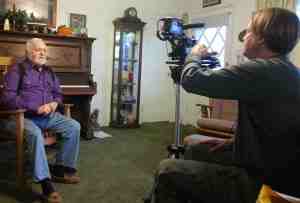
Jerry Ensminger’s 9-year-old daughter died of a rare form of leukemia he believes was caused by solvent-laced drinking water at Camp Lejeune, N.C. Her death could have been prevented, he says, if the Marine Corps had followed its own testing regulations.

“I have never been so disillusioned in my life,” says Ensminger, who served 11 of his 25 years in the Marine Corps at the base. “I want the truth. I want accountability. And I fully recognize they will probably pat me in the face with a shovel and blow Taps over me before I get that.”

Ensminger can claim partial victory in his 15-year battle over contamination at Camp Lejeune, where drinking water was tainted with five times as much trichloroethylene (TCE) as the Woburn, Mass., drinking water system made famous in the book and movie “A Civil Action.” Congress recently mandated that VA provide health care for Marines and family members stationed at Camp Lejeune between 1957 and 1987 who are suffering from certain cancers and neurological diseases.

“This bill is confirmation by the president of the United States and Congress that we were harmed by our leaders,” he says.

But the plainspoken former drill instructor and father of four is not standing down. “This is not the end of the issue – this is the end of the first act,” Ensminger says. “They are still withholding information from Congress and the public. There has been no accountability for the people who perpetrated this on us and our families.”

Record Exposure

The Marine Corps acknowledges that as many as 800,000 Marines, family members and civilians drank, swam and showered in Camp Lejeune’s toxin-laden water, the largest exposure of its kind in the nation.

Established as an advanced training base in 1941, the 246-square-mile complex relied on dozens of shallow wells, averaging 40 feet deep, for drinking water. These wells were contaminated by leaking fuel-storage tanks, a chemical dump and discarded industrial solvents. One well was even installed in a corner of a Camp Lejeune landfill where solvents, DDT and other waste was discarded. A civilian dry cleaner near the Camp Lejeune family housing complex where Ensminger lived also polluted the drinking water.

The Marine Corps says the contamination was the unintentional byproduct of an era when federal law didn’t limit the amount of toxic substances – including tetrachloroethylene (PCE), TCE, benzene and vinyl chloride – in drinking water.

“In the early 1980s, standards and regulations for the treatment and disposal of solvents were just starting to be put into place,” the Corps said in an email response to questions about Camp Lejeune. “The understanding of health effects of these chemicals has evolved. For example, up until 1977, TCE was allowed for use as a general anesthetic, skin wound and surgical disinfectant.”

Health experts call the Marine Corps’ response disingenuous.

“Hiding behind the lack of an official regulation doesn’t fulfill its moral obligation to the Marines and their families,” says Richard Clapp, an epidemiologist at the Boston University School of Public Health, who specializes in causes of cancer in workers, community residents and veterans. Massachusetts voluntarily closed two Woburn wells in 1979 after tests revealed a far lower TCE contamination level than that at Camp Lejeune, even though the Environmental Protection Agency (EPA) hadn’t yet set drinking water limits on the carcinogen.

“That was based on guidance from EPA and not a formal regulation, but it was done to protect the public health based on evidence available at the time,” Clapp says. “I see no reason why the Department of the Navy could not have done the same thing to protect its people.”

The medical community, meanwhile, abandoned TCE as an anesthetic because it was lethal. “It was causing people to go into heart failure on the operating table,” Clapp says. “That should have sent up a red flag about TCE exposure in the late 1970s as well.”

“I Had to Be Strong”

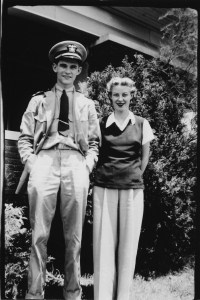
Ensminger first went to Camp Lejeune after he graduated from boot camp in 1970. He and his wife lived in a Marine Corps family housing complex called Tarawa Terrace from 1973 to 1975. One of their daughters, Janey, was conceived and carried through most of her first trimester at Camp Lejeune. That timing is key. A developing fetus is so sensitive to the chemicals that were present in Camp Lejeune’s water, Clapp says, that a few hours or days of exposure at the wrong time could cause birth defects, cancers or neurological diseases. There was an eightfold increase in the risk of childhood leukemia among Woburn, Mass., babies whose mothers were exposed to the TCE-contaminated water during pregnancy.

Ensminger and his family returned to Camp Lejeune in 1982, and lived in nearby Jacksonville, N.C. The town had little in the way of community recreation facilities, so his daughters regularly swam in the base swimming pools. Because TCE and the other contaminants can be absorbed through the skin, the pools were just one more source of potential exposure.

Janey Ensminger was diagnosed with childhood leukemia in July 1983. She was 6.

“At first I went into shock,” Ensminger says. “Then it was the hustle and bustle of getting her to a treatment facility.”

They took Janey to Penn State University Medical Center and Duke Children’s Hospital, searching for a cure and answers. No one in his or his wife’s family had ever had cancer. Janey’s illness didn’t make sense.

“After I had a chance to sit down and think about it, the question was why,” Ensminger says. “But these doctors couldn’t – or wouldn’t – answer my nagging question.”

Ensminger told Janey they would fight her cancer together. He told himself that he wouldn’t cry in front of his daughter. “I had to be strong,” he says.

“Every time that child went into a treatment room, she was screaming, ‘Daddy, Daddy, don’t let them hurt me,’” Ensminger says. He finally broke down in front of his daughter in late September 1985. Janey told him she loved him, lapsed into a coma and died 30 minutes later.

“I didn’t just lose my daughter. I feel like I lost my entire life,” Ensminger says.

Mystifying Response

Why didn’t the Marine Corps begin testing drinking water for total organic pollutants – a class of chemicals including TCE, PCE, benzene and other toxic substances – in 1963, as Navy regulations required?

The Corps says such testing wouldn’t have made a difference because those early regulations didn’t require specific analysis for TCE, PCE and other toxic substances. Indeed, the appropriate analytical tools weren’t readily available or commonly used by water utilities in the early 1960s.

But even if the Marine Corps hadn’t identified the specific contaminants, those early tests would have alerted officials to a significant pollution problem and prevented decades of human exposure to solvents and other dangerous chemicals, Ensminger says. At a minimum, the Corps would have discovered that Camp Lejeune’s Hadnot Point Fuel Farm was leaking, eventually allowing as much as 1 million gallons of petroleum to seep into the soil and groundwater.

There is other evidence to suggest that camp commanders were slow to act. Congress passed the Safe Drinking Water Act in 1974 after a national outcry over water pollution. Even the magazine Civil Engineering – hardly a staple of the environmental movement – published a cover story in September 1977 headlined, “Are U.S. cities doing enough to remove cancer-causing chemicals from drinking water?” By then, Camp Lejeune had the third-largest municipal water system in North Carolina and was obligated to meet federal drinking water standards.

An Army analytical lab was finally tapped to test Camp Lejeune’s water in 1980, as required under the Safe Drinking Water Act. It alerted the base several times to high levels of drinking water pollution that were interfering with its analysis, although the lab didn’t identify specific contaminants. Two years later, a private lab also found dangerously high levels of toxic substances while conducting similar water sampling. In fact, the water was so contaminated that Grainger Labs assumed it had gotten bad samples. It repeated the tests several times in May 1982 and discovered dangerously high levels of TCE and other solvents.

“I was alarmed,” says Mike Hargett, then co-owner of the lab. “By 1982, the toxicological impact of TCE and PCE exposure was well‑established. They should not have been drinking that water.”

Hargett took his concerns to Camp Lejeune officials, and even met with the officer in charge of the water utility – an individual whose name he no longer recalls. “I said, ‘This is not something you want to expose the population to,’” Hargett says. “He dismissed me, saying, ‘This is something we will turn over to the Navy.’”

Camp Lejeune continued to use the contaminated wells for another two and a half years. As a result, water supplied to parts of the base by the Hadnot Point treatment plant contained as much as 1,400 parts per billion of TCE. That’s the highest level of the solvent recorded in a municipal drinking water system in the United States, and 280 times today’s TCE limit.

But the Marine Corps says the source of the pollution was unknown. It also cites the lack of limits on solvents in drinking water as a reason it didn’t take immediate action. In addition, it’s difficult to second-guess decisions made decades ago. “Although it is impossible to know why a discretionary action was or was not taken more than 25 years ago, one must view the situation in the context of the relevant time period,” the Marine Corps says.

Camp Lejeune finally began closing its highly contaminated wells in late 1984. Even then, the base newspaper mentioned only “trace contamination” and did not warn of any potential health effects. A letter the Marine Corps sent to Tarawa Terrace residents in April 1985 mentioned “minute (trace) amounts of several organic chemicals in the drinking water,” but most of the letter focused on water conservation required by the well closures.

This lackluster response is puzzling for other reasons. The Navy shuttered contaminated water wells at other bases well before Camp Lejeune finally took action. Naval Air Station Willow Grove and Naval Air Warfare Center Warminster – both in Pennsylvania – closed contaminated wells in 1979, according to records Ensminger unearthed.

Hargett’s firm found lower concentrations of contamination in the drinking water at Marine Corps Air Station Cherry Point in North Carolina in the early 1980s. Hargett notified Cherry Point’s water system manager, who immediately shut down the offending well because the person in charge of the utility “understood the severity of the problem,” he says.

The difference, Hargett believes, is that the problem didn’t come to the attention of the right person at Camp Lejeune until late 1984. “I don’t think they had the right information or understanding of the problem,” he says. A field commander is concerned about having enough water for his troops to bathe, drink and do the work he needs to do. “The details of what was in that water were a secondary concern.” That mentality carried over to the water utility at Camp Lejeune.

Haunted By Questions

In the summer of 1997, almost 12 years after his daughter died, Jerry Ensminger heard a TV news report that said Camp Lejeune’s drinking water had been

contaminated with solvents potentially linked to childhood leukemia. “It was like God had opened up the sky and said, ‘Jerry, here is a possible answer to the nagging question that has plagued you,’” he says.

By then, Ensminger had retired from the Marines as a master sergeant and was raising corn and soybeans not far from Camp Lejeune. He started a group called The Few, The Proud, The Forgotten and began digging for answers. Tom Townsend, a former Marine whose son mysteriously died six weeks after his birth at Camp Lejeune, joined Ensminger. Townsend filed more than a thousand requests for Marine Corps and Navy records under the federal Freedom of Information Act.

Townsend’s health later forced him to step aside. But Mike Partain, the son of a Camp Lejeune Marine, heard about Ensminger’s work and stepped up. Partain was born at Camp Lejeune in 1968, had just undergone a radical mastectomy for a rare case of male breast cancer and was likewise searching for answers. He dedicated nine months to sorting the records Townsend and Ensminger had obtained and constructing a detailed timeline of Camp Lejeune’s contamination.

Ensminger and his volunteers pored through hundreds of documents, including copies of emails that showed that the Marine Corps considered postponing the release of information about drinking water contamination at Camp Lejeune, as well as a health survey, because the movie version of “A Civil Action” was about to hit theaters. Such timing would bring unwanted attention to the problems at the base, one Camp Lejeune official worried.

Ensminger, meanwhile, made countless trips to Capitol Hill. He’s testified before the House and Senate five times. In 2008, he successfully lobbied Congress to order the Marine Corps to formally notify former Marines, family members and civilians about the Camp Lejeune water contamination. Ensminger scored another victory last August when President Barack Obama signed legislation mandating VA health care for former Camp Lejeune residents. However, there are concerns about how long it will take VA to begin providing care to families.

Ensminger continues his fight for comprehensive epidemiological studies of the people who lived and worked at Camp Lejeune, and is worried about ongoing delays in the release of the results. The Agency for Toxic Substances and Disease Registry was expected to publish two studies in July: an analysis of birth defects among Camp Lejeune residents and a historical reconstruction of their exposure to contaminated drinking water. The historical reconstruction is particularly important, he says, since it’s the foundation for future Camp Lejeune health studies.

Most of all, Ensminger tries to make sense of the profound betrayal he and others feel from an institution he served and revered – and to answer the questions that still haunt them, such as how and why.

“We still don’t have the whole truth about what happened to us and our families,” Ensminger says. “Janey’s dead. Nothing’s going to help her. But there are other people out there who are still suffering.”

The story originally appeared in the February 2013 issue of The American Legion Magazine.

Posted in Uncategorized | Tagged , , , , , , , , , , , , , , , , , , , , , | Leave a comment

Suicide help on the home front: Symposium April 20 at Fort Belvoir, Virginia for military spouses and children

Frustrated by the lack of attention on the crisis military families face, an Army wife is organizing a suicide awareness symposium to help the spouses and children who are struggling on the home front.

“Are You Listening: Suicide Awareness for Spouses and Family Members” is planned for April 20 at the USO Warrior and Family Center in Fort Belvoir, Va., says Karen Francis, the military family advocate who organized the symposium. Plans for the program include the survivor of someone who committed suicide, representatives from Give An Hour, Not Alone, American Foundation for Suicide Prevention, and other groups.

The symposium also includes stress management information, yoga and lunch. There is no charge.  The symposium runs from 8:30 a.m. to 1 p.m.

Francis was prompted to put together the symposium after the September 2012 Army-wide suicide stand down failed to address suicide risk among military families.

“They did not say one word about family members except, ‘Servicemembers should keep an eye on their spouse,’” Francis says. “They aren’t counting us, but we know spouses are committing suicide and teenagers are committing suicide.”

The April 20 workshop is geared specifically to families of servicemembers, DoD contractors, Guard and Reservists. Francis also hopes to reach caregivers of injured servicemembers.

“We’re there to provide as much information as possible so they know there’s a place to reach out besides Military OneSource,” Francis says. “If Behavioral Health can’t help you, there are many alternatives.”

Posted in Uncategorized | Tagged , , , , , , , , | Leave a comment

Frank Kowalski’s forgotten war: In the mid-’50s, Kowalski and hundreds of other U.S. soldiers were sent to a largely unknown country called Vietnam

By Ken Olsen

(Copyright 2013, All Rights Reserved)

The Pentagon didn’t acknowledge Frank Kowalski’s tour in Southeast Asia for more than 40 years. Some of his fellow veterans still don’t.

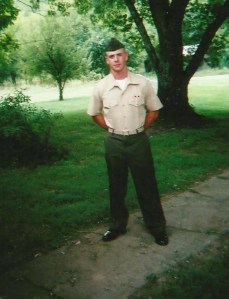
Kowalski was handed orders for Vietnam on his 19th birthday in September 1955 and told nothing else about his surprise new assignment. Six weeks later, he received a top security clearance and $200 to buy tourist clothes. “Trying to buy summer wear in November is a little difficult,” he jokes. He soon flew to Travis Air Force Base in California to begin an eight-day island hop across the Pacific in a turboprop military transport.

Frank Kowalski and his brother Chester just before Frank shipped out to Vietnam. (Photo Courtesy of Frank Kowalski.)

Frank Kowalski (left) and his brother Chester just before Frank shipped out to Vietnam. (Photo Courtesy of Frank Kowalski.)

When he arrived in Vietnam shortly before Christmas, Kowalski stashed his uniform and donned the slacks and short-sleeve shirt the Army ordered him to wear. During his first night in Saigon, he was assaulted by a group of rock-throwing Vietnamese while returning to his apartment across from the Metropole Hotel. A dental technician stitched up his head.

Kowalski was with Tech Sgt. Richard Fitzgibbon Jr. when he was killed by a fellow airman on June 8, 1956. More than 40 years later, Fitzgibbon became the earliest U.S. casualty etched into the Vietnam Veterans Memorial in Washington. The publicity surrounding that event enabled Kowalski to meet Fitzgibbon’s daughter and tell her about the father she barely knew. (Fitzgibbon’s son, Richard III, was killed in Vietnam in 1965; the Fitzgibbons are one of two confirmed father-son duos to die in the war.)

Kowalski regards his service with the Military Assistance Advisory Group (MAAG) Vietnam, an early U.S. effort to train the South Vietnamese army to defend itself against the communist North, as one of the defining experiences of his life. Throughout his career as a rehabilitation counselor, special education teacher, and high school drug and alcohol counselor, he kept two photos on his desk. One was of his father at the steel mill in western Pennsylvania that Kowalski sought to escape when he joined the Army. The other was a picture of himself preparing to go to Vietnam.

Kowalski recently spoke with The American Legion Magazine about his role with MAAGV and his interactions with the Vietnamese people.

What did you know about Vietnam before you deployed?

My orientation was probably better than anybody else’s because I was attending McKeesport (Pa.) High School in 1954 and my civics teacher – a World War II veteran – taught us current events. French Indochina was falling at the time. Still, Vietnam was so new that after I got my orders I had to go to the Fort Myer library and look it up.

What went through your mind as you stepped off that plane in Saigon?

I was terrified. I remember riding in the jeep to my quarters, going past rice paddies, hearing gunshots, smelling dung.

Did that sense of unease persist?

I was apprehensive. I couldn’t tell who the good guys were and who the bad guys were. Saigon was infiltrated by thousands of refugees who were fleeing North Vietnam. No one spoke English. People would drive by and shoot at the Americans. A couple of months after I got there, somebody threw a satchel charge in the back window of one of our Chevy coupes and killed our Vietnamese driver. We weren’t allowed to go out during the presidential election in April 1956 – there were demonstrations and shooting – or on May Day, which is a big communist holiday.

What was most difficult about your tour?

Frank Kowalski's visa for blog

Frank Kowalski’s was issued a Vietnamese visa for his tour with MAAG in the mid-1950s.

Not knowing anything about the Vietnamese culture or people, not understanding the language and what these people had gone through after 100 years of French occupation and, during World War II, four years of Japanese occupation. There were French aristocrats having parties and people living in the gutter starving. You could go from the impoverished to the elite in 10 minutes.

Did you blend in as a tourist, like the government hoped?

I had red hair. People stopped and stared at me when I walked down the street.

Describe the assault your first night there.

I was walking back to the billets with an Army sergeant who was going to be working with me, and these Vietnamese were following us. They started throwing rocks, and I got hit in the head.  I had to be sewed up by a dental technician. The next day my commanding officer said, “Did anybody tell you not to go out at night?”

How did your perspective on the Vietnamese change?

I came to respect them. They were very bright people, very industrious. By the time I left, I thought they might just pull it together and win this war. They didn’t. But they came over here and grabbed the American dream. Today, if you go to the VA here in San Diego you have a lot of Vietnamese doctors and nurses. The cardiologist who put a couple of stents in me was Vietnamese.

How did you come to teach English?

A guy in the signal section taught a conversational English class in a building next to the embassy. They asked me if I wanted to take his place after he left. It was mostly telling stories about America. They wanted to know what snow was like. If you really had hot water every day. It sparked my interest in education.

Describe the group you deployed with

There were 350 of us. A lot of the guys with me were career – World War II veterans, and some fought in Korea. About a quarter of us were around Saigon, and 75 percent were out in the provinces teaching the Vietnamese how to fight. Were the bad guys shooting at us? Yes. Were we shooting back at the bad guys? Yes. Did anybody say anything about it? No.

There also were a lot of CIA there, but you didn’t know who they were because we all wore civilian clothes. You could be shooting the breeze with a guy at the bar thinking he was another PFC and he was CIA. My older brother, Chester, showed up about six months after I arrived. He was with the Army’s Temporary Equipment Recovery Mission, which was supposed to track all of the weapons and ordnance we had given the French that had gone missing.

What was your job?

I was in the signal section. Our primary job was to establish radio contact with our guys out in the bush training the South Vietnamese army. We also monitored Hanoi. And we maintained a signal with Clark Air Base (in the Philippines) because if we evacuated, it was to Clark. It was boring as hell at 2 in the morning, so I listened to Radio Free America and read teletypes of the propaganda broadcasts from Hanoi.

And you bought a gun on the black market?

We were guarded by South Vietnamese troops. They weren’t that good, and there weren’t enough of them to guard the transmitter and receiver sites. Since I worked 10 miles outside Saigon – and worked alone – I wanted a weapon. I bought a revolver, but it was big and bulky and I felt like John Wayne. So I traded a guy at the U.S. Embassy for a nickel-plated .32-caliber Beretta that I could carry under my shirt. I had to get a license and register my weapon with the Vietnamese-American Consulate. I only used it once. I fired three shots in the air to scare off these Viet Cong who would come to my radio shack at night and throw rocks at the shutters. Everyone in the signal section bought weapons because of the limited security and sold them to our replacements as we left.

How was Tech Sgt. Richard Fitzgibbon Jr. killed?

Fitz was the crew chief on a C-47 that flew provisions out to our guys in the bush. The radioman on his airplane was giving him problems because they were taking ground fire and he was frightened. Fitz was saying, “If you keep flaking off, I’m going to write you up.” One night, this radioman got his pistol, came into the bar at the Metropole and started shooting. Emptied one clip. Put another one in his gun, then went outside and shot Fitz four times.

I was coming out of a movie next door, heard all of the gunshots and smelled the cordite. I went around the corner, saw two guys lying on the sidewalk. I knelt down by Fitz and held the back of his head. He wanted to sit up a little bit so he could breathe better. I knew he wasn’t going to make it. It was June 8, 1956. I thought, “Jesus, I just graduated from high school two years ago today. What the hell am I doing here?” The other guy who was shot was evacuated to Clark. The radioman went up a fire escape, fell and died.

Somebody put a fishbowl on the counter of the hotel and we put money in it for his widow and four kids. I often wondered what happened to his family – whether his widow ever got that money. There was no Internet, no way to search. I went to the VA in Cleveland after I got home to get the ringing in my ears checked out, and I asked them if they had any records of our group that might help me find his family. The VA told me, “Nobody from the U.S. has gone to Vietnam.”

How did you finally connect with the Fitzgibbon family?

A TV reporter called me on Veterans Day 1998 when Fitz’s name was going to be added to the Wall. She told me Fitz’s daughter lived nearby. So my wife and I followed the reporter over to her house. I gave his daughter pictures of where Fitz lived and where he sat in front of the hotel handing out candy to the Vietnamese children. I told her how he got a jeep and took us all to Mass on Easter Sunday. I asked her if her mother had ever received the money we collected for the family. She didn’t know. But that night Fitz’s sister, Alice, called me. She said, “Forty-three years later, his widow wants me to thank you.”

How does it feel to not have your Vietnam service acknowledged?

There’s virtually an era of involvement that is forgotten. Someone in the Pentagon decided Vietnam started in 1962. When I tried to join the VFW, I was told I was not in Vietnam prior to 1962. My DD 214 didn’t say “Vietnam,” it said “foreign country.” I had never really paid attention to it. The Legion classifies me as a Korean War veteran because I served 1954 to 1957.

Nothing that we did compared to what they did from ’62 to ’75. But that should not denigrate what a few thousand soldiers did before 1962. We had a lot of casualties. And I’m proud of my service. I’m not looking for acknowledgement. I’m looking for recognition that people were there and doing a good and noble thing prior to 1962.

Did you think Vietnam would become a controversial war?

No. I thought we’d have some kind of stalemate, the politicians would get involved and then we would have some kind of agreement with the North. I never in my wildest dreams thought 58,000 guys would never come back.

What is MAAG’s legacy?

It was a noble effort to do the right thing in the spirit of the time. Russia and Red China were at their peak. There was an invasive communist threat. The tragedy of the Korean War was still so fresh. We didn’t want that to happen again.

This story originally appeared in the February issue of The American Legion Magazine.

MAAG reunion set for May

Two years ago, Wayne McCaughey started searching for soldiers who had served with him in the little know Military Assistance Advisory Group (MAAG) Vietnam. That led him to organize the first reunion of this group of servicemembers who put aside their uniforms and weapons in the 1950s and early 1960s to help train the Army of the Republic of Vietnam defend itself from the North Vietnamese.

McCaughey served with MAAG-Vietnam in 1960 and sustained shrapnel wounds when a South Vietnamese soldier tripped a landmine.

The reunion will include service members who served both with MAAG-Vietnam and it’s earlier incarnation MAAG – Indochina. It will be held May 10-12 at the Airport Hilton in St. Louis. For more information, contact McCaughey at 540-450-8526 or email him at wmmccaughey@verizon.net.


Posted in Uncategorized | Tagged , , , , , , , | Leave a comment

Upside Down Lives: Spouses and parents of severely injured veterans struggle under weight of 24/7 caregiving

By Ken Olsen

(Copyright 2012/All Rights Reserved)

By the time Debbie Schulz got help, she had been her wounded son’s full-time caregiver for more than six years. She had lost her husband, her teaching career and her retirement. She lay awake at night wondering how she was going to get health insurance.

“That blast changed the fabric of our family,” Schulz says of the roadside bomb that inflicted a traumatic brain injury (TBI), partial paralysis and vision loss on 20-year-old Steven Schulz during his second tour with the Marines in Iraq. “It’s that sort of constant having to rewrite your life and what you are doing.”

Yet, Schulz is fortunate among caregivers in some respects. Last year, she started receiving a stipend and health insurance under the Caregivers and Veterans Omnibus Health Services Act of 2010, the first federal program to provide assistance directly to families caring for veterans of the wars in Iraq and Afghanistan. “As everybody applies and settles into the program, we’re realizing how much we needed it,” Schulz says. “And we wonder how we ever got by without it.”

Schulz and other caregivers also hope that the program, championed by The American Legion and other veterans service organizations, will evolve to meet the realities of caring for injured veterans. High on the list: compensation. Caregivers receive a stipend for a maximum 40-hour workweek – far short of the around-the-clock care many provide, particularly to veterans with brain injuries. “It’s truly 24/7, even when they look fairly independent,” Schulz says.

Respite care and counseling provided by the legislation are also inadequate and difficult for families to access. In addition, many caregivers of post-9/11 veterans have no idea the program is available.

“I’m still hearing from people who don’t know about it,” says Karen Francis, an Army wife and military family advocate. “I can’t imagine it would be that hard to do phone outreach.”

New Realities

Sarah Wade helped start the drive for caregiver relief in 2005, about a year after her husband, Ted, was blown out of the back of a Humvee in Iraq and suffered TBI, a broken leg and amputation of his right arm. Then-Sen. Hillary Clinton introduced the Heroes at Home Act in 2006, but the measure died.

Wade, military families and VSOs kept up the pressure, and the Senate went to work on a new bill, says Ian de Planque, the Legion’s deputy director of legislative affairs. But VA opposed caregiver legislation – the agency insisted its mission was to help veterans, not assist families – and the program was painfully slow to launch. The agency didn’t start accepting applications until May 2011, a year after the act passed.

Despite this rocky start, the program is making a difference. “There’s a system in place, there are families who are getting benefits, and it’s doing what it’s supposed to be doing,” de Planque says.

The result, as Sen. Dick Durbin, D-Ill., noted in a speech marking the anniversary of the act, is that veterans “are home with someone they love at a fraction of the cost of institutional care.”

Today, Schulz and Wade are among no fewer than 5,150 caregivers receiving stipends through the post-9/11 veterans caregiver program – 1,000 more than VA had anticipated enrolling by 2015. They receive, on average, between $600 and $2,200 a month, based on care needs and local wage rates for home health aides in their area. About 1,200 caregivers also receive health insurance through the program.

The burden on these parents, spouses and siblings is considerable. Many are exhausted, overwhelmed and face decades in roles they never prepared for. “It’s a drastic shift to go from coping with being apart to being together 24/7,” says Wade, whose husband served with the Army in Afghanistan and Iraq. “And it’s not like I was eased into that transition.”

Even families with professional caregiving or mental health treatment experience are surprised by the demands. Schulz was a psychiatric social worker for the state of Texas for nine years before becoming a special-education teacher in a Houston suburb. “Both of these careers prepared me for some of the realities of traumatic brain injury,” Schulz says, “but not the realities of becoming a caregiver.” Her son required help with tasks as simple as getting dressed and brushing his teeth. “It was step by step,” she says. “I was exhausted those first six years.”

Schulz took a temporary leave from her teaching job after her son was wounded in April 2005, thinking she’d go back to work the following fall. She extended her leave twice – once for six months and then for a year – before she realized that she would never be able to return to the classroom. “Dealing with Steven was a lot like dealing with my class,” she says. “I know I couldn’t do that during the day and come home at night and deal with Steven’s needs.”

In addition, Steven couldn’t be left by himself. And Schulz didn’t have the resources to hire someone to help him, or the confidence that she could find someone who would take good care of her son. Then her husband died unexpectedly in March 2011.

Elements of Schulz’s dilemma are common to families helping injured veterans.

“People are really struggling with their role as caregivers,” says Joan Griffin, a researcher with the Minneapolis VA Health Care System and an associate professor of medicine at the University of Minnesota Medical School. She led a 2009 study of caregivers. “It’s incredibly hard.”

Post-9/11 caregivers deal with far different issues than those helping veterans from earlier conflicts, who are more likely to suffer from cancer or chronic diseases than combat-related injuries, Griffin says. Because they are helping Iraq and Afghanistan veterans, they are typically younger and face a lifetime of caregiving. They often take care of veterans with multiple injuries – such as TBI, amputations and other wounds – who might not have survived earlier wars. Because of their age, post-9/11 caregivers are unlikely to have peers also taking care of a veteran, leaving them isolated and invisible.

The strain goes both ways. “I think the level of stress is pretty great for veterans and caregivers,” Griffin says. “A lot of times with brain injuries, veterans can remember what they were like before the brain injury. The caregivers mourn who they’ve lost and the things they used to do, just as the veterans mourn who they used to be.”

“You are asking some very young people to take on something they never thought they would have to take on,” Francis adds. “You reach the point you want your own life too.”

Lonely Road

Count 32-year-old Lee Karcher among the frustrated. Her husband, Mark, came home from his third deployment with TBI, PTSD, and knee, back and shoulder injuries. He suffers from migraine headaches, a hernia, acid reflux, sleeplessness and depression. He has not been able to find a job since he was honorably discharged from the Army and returned to southern Oregon in September 2010.

“I sent him to war a whole, healthy strong man and they returned a broken shell of a man to me,” says Karcher, who cares for her husband and six children ages 6 to 13. “It can be a very lonely road. It’s like having another child – a disturbed child, on top of that.”

Negotiating the veterans benefits system has been arduous and confusing. “We’ve been told something different at four different VAs,” Karcher says. “Eventually you get to the right person, but we spend several hours a week chasing information.”

Karcher learned about the caregiver program from Mark’s VA psychiatrist. Lee, who was designated his official caregiver in August 2011, receives a monthly stipend of about $1,200 – the equivalent of about $8 an hour for a 40-hour work week. But that extra income cost the Karchers most of their food stamp benefits.

That’s an unfair trade, she says. “It’s like, ‘Thanks for your service to our country. Now get out of here.’”

High co-pays also prevent Karcher, who has Crohn’s disease, from using the health insurance she receives through the caregiver program. And she is too busy homeschooling children with special dietary needs, and getting her husband to medical appointments in four different cities, to take advantage of the caregiver respite or counseling programs.

Assuming the role of single parent, however, has been the hardest part of this upside-down life. “I need a second adult in the house to be an example, to be a disciplinarian, to give kisses and a hug, to be an extra set of hands,” Karcher says. “To have that go downhill is, as a mother, really hard to watch.”

Still, Karcher remains committed. “At times, things feel really bleak,” she says. “But I am a faith-based person. I feel the angels have been there pulling my load. There are still times of peace and love.”

This sort of resilience is typical among caregivers Griffin encounters in her research. “I am amazed by their spirit,” she says. “I never finish (a caregiver) interview without thinking, ‘I can’t believe how they have persevered.’ It’s heartbreaking and heartwarming at the same time.”

Griffin and her team surveyed 564 family members caring for veterans discharged from VA polytrauma treatment centers. The results are both encouraging and cautionary. Thirty percent of the caregivers said their veterans needed very little help. “That’s a sign that rehabilitation works,” she says. “My hopeful side is that a certain portion do get better and go on to lead functional lives.”

Even so, 22 percent are completely consumed by their roles. Half of these “high-intensity caregivers” are providing care more than 80 hours a week, Griffin says. “That is a pretty vulnerable group that needs a lot of support.” And their stress doesn’t subside over time, as some might expect.

“The take-home message is that the consequences of war extend far beyond the veteran who has fought, to families and communities,” Griffin says. “Those consequences will extend a long time, and families and communities are not well-prepared for what that takes. VA has a role in setting that up.”

Dignity and Equality

Going forward, families and veterans advocates hope that VA’s role will include revamping respite care and caregiver counseling. “Neither are easy to access or appropriately provided,” Schulz says.

Indeed, Wade’s options for respite care include leaving her husband at a VA hospital, nursing home or similar institution for up to 30 days a year. But he would be miserable in such a restrictive environment with an older population, she says. “I was adamant, because of our experiences, that respite care be age-appropriate for the veteran,” Wade says of her work to help draft the legislation. “That isn’t happening.”

For the Wades, another option is using a home health agency of VA’s choice. But Ted says he’s uncomfortable having a stranger caring for him at home, and Sarah is leery of leaving him with someone not well-versed in his needs. “They typically aren’t experienced with cognitive and neurobehavorial issues (such as TBI and PTSD) and they aren’t trained to deal with mental health issues,” Wade says. “Polytrauma care can’t be cookie-cutter. Each individual has unique issues that compound each other.”

The fix is straightforward, caregivers say. Families should be able to hire an approved provider of their choice to stay with a veteran when they need the help. “I don’t expect VA to be able to provide it all,” Wade says. “Leverage community resources to provide the best and most appropriate care.”

VA officials say they’re open to making changes. “We’re aware we have work to do in this arena,” says Deborah Amdur, VA’s chief consultant for care management and social work. “We are working with our community partners on alternatives.” VA also hopes to introduce an alternative telephone support program to help caregivers who cannot access the current counseling options.

VA and caregivers, however, are still at odds over increasing caregiver stipends to recognize the 24/7 strain on families. VA says it will contract with home health agencies to supplement family caregiving where it’s deemed necessary for more than 40 hours a week, Amdur says. “We understand the significant burden many of these families are under and want to support them with supplemental care in the home as needed. We know the stipend does not replace employment. It is meant to be a recognition of sacrifices the family caregivers make.”

For caregivers, however, this reinforces how poorly VA understands the situation. “We wrote this bill because home health agencies were either an inappropriate resource or limited as far as usefulness,” Wade says. “Ted’s doctor has said since 2005 that a home health agency is clinically inappropriate care. Shouldn’t that be enough?”

Caregivers are also mystified by VA’s willingness to spend huge sums of money on home health agencies instead of assistance appropriate for young veterans with a range of complex physical and cognitive injuries. “The idea isn’t to simply put the veteran somewhere and keep them alive,” Wade says. “If VA is willing to spend the money for Ted to be miserable with a home health agency or a group home and separate him from society, why would they not be willing to use that money to provide quality of life and further his independence as well?” she continues. “Our country owes it to Ted to treat him with dignity and equality.”

Outside of VA, meanwhile, there is broad support for expanding the post-9/11 caregiver assistance program to families caring for veterans of all eras.

“I know that would be very costly,” Schulz says. “But it sort of puts a rift between generations when one gets it and, for the others, it’s ‘Oh, no, you can’t have it.’”

“I’ve fielded a lot of calls from people who say, ‘I’ve taken care of my husband since Vietnam,’” de Planque adds. “I have a lot of sympathy for that. We hope to get that changed and are working toward that goal.”

VA will present a report to Congress on the feasibility of expanding the program this spring, but there’s no indication where that will lead. Despite the flaws in the caregivers act, families of post-9/11 veterans can’t imagine being able to do this work without the assistance.

“Without the caregiver stipend and attached benefits,” Schulz says, “I would probably be much like I was for the first six years – treading water, but never knowing what event may come along and sink me.”

This story first appeared in the December 2012 issue of  The American Legion Magazine.

Posted in Uncategorized | Tagged , , , , , , , , , , , , , , , , , | Leave a comment

For Air Force veteran, challenge trumps comfort

By Ken Olsen

(Copyright 2012/All Rights Reserved)

Nicole Green walked away from her secure six-figure salary at a Washington consulting firm for a far more austere and uncertain future at Team Rubicon.

That says everything about the quality of people the veterans group attracts, not to mention Green’s dedication to helping veterans find a meaningful place in the civilian world.

“She would rather have something that gives her purpose,” says Joshua Webster, Team Rubicon’s personnel and training director, who Green is replacing as he returns to active duty with the Army. “It’s amazing we have people willing to do that.”NIcole in Joplin

The decision was easy for Green.

“Team Rubicon has given me a much more tangible sense of accomplishment,” she says. “It’s given me a peer group I didn’t realize I was missing as much as I was.”

Green had plenty of other options. An Air Force Academy graduate, she served as an intelligence officer in Iraq early in the war. She left the military in 2006 and taught English in Russia while earning her master’s in diplomacy with a focus on conflict resolution. Green then moved to Washington to work as a management consultant for Deloitte Consulting.

“She’s the type of person you look at and think you’d never be able to afford to hire because she’s so intelligent, successful and accomplished,” says Jake Wood, president and co-founder of Team Rubicon. “Fortunately for us, Nicole has a deep passion for Team Rubicon and our mission. She’s willing to sacrifice some of the comforts afforded her pedigree to join our team.”

Green is like a lot of the talent Team Rubicon attracts. Army veteran Matt Pelak volunteers as the group’s field operations director when he’s not working as a firefighter/paramedic in Poughkeepsie, N.Y., or serving with the National Guard. Dan Fong, a Denver-area firefighter/paramedic field instructor, donates his time as a regional coordinator and counts himself lucky to be able to work with a rapid-response effort even though he has no military background. Dr. John Sutter volunteers as chief medical officer between shifts at a hospital in Bethel, Alaska, and a homeless clinic in New York City.

“Everybody I’ve met in the organization is trying to do something outside of themselves and outside the norm,” Sutter says. “I believe in the mission, and everybody I’ve met along the way is going to be a friend for life.”

Like many people, Green’s connection to Team Rubicon involves the late Clay Hunt – one of the group’s original members. She met Hunt and Wood during a veterans lobbying week on Capitol Hill in 2010, soon after they returned from Team Rubicon’s first Haiti mission.

Pelak recruited Green after Hunt, haunted by PTSD and depression, killed himself in late March 2011. “At Clay’s funeral, Matt walked up to me and said, ‘You have a level head. You are good in a crisis. You should join.’”

Nicole Green clearing debris after a tornado ripped through the Joplin, Mississippi area.

Nicole Green clearing debris after a tornado ripped through the Joplin, Mississippi area.

A month later Green was part of the team’s response to the tornadoes in Tuscaloosa, Ala.,followed almost immediately by a mission to the tornado-ravaged Joplin, Mo., area. Next came Hurricane Irene on the East Coast.

“It’s a call to action that immediately engages every veteran,” Green says. “It gives them a purpose, a focus, a sense of pride. They tell me, ‘This gives me a reason to be proud to be a veteran.’”

This story appeared in conjunction with Mission Possible – the story of how Team Rubicon was born in the midst of the 2010 Haiti earthquake. 

Posted in Uncategorized | Tagged , , , , , , , , , , , | Leave a comment

Mission Possible: Team Rubicon’s rapid response to natural disasters gives combat veterans the challenge they crave

By Ken Olsen

(Copyright 2012 / All Rights Reserved)

The moment he saw the destruction on TV in January 2010, former Marine scout-sniper Jake Wood knew he had to get to Haiti. He called a few friends, posted a quick note on Facebook – “I’m going to Haiti. Who’s in?” – filled some duffel bags with first-aid supplies and headed for the airport. Team Rubicon was born.

Forty-eight hours later, Wood joined seven other volunteers – Marines, firefighters, physicians, a priest and a former Special Forces medic – at the Santo Domingo airport in the Dominican Republic and headed for the Haitian border. Six days after the magnitude-7 earthquake devastated the region, they were running a makeshift emergency room in the courtyard of Port-au-Prince’s largest hospital.

By the end of the mission, Team Rubicon had treated thousands of Haitians and started a rapid-response group that has since dispatched combat veterans to natural disasters from Alabama and Indiana to Burma and the Sudan.

“I self-responded to Hurricane Katrina with a buddy from high school, and I saw how poor the response could be when things got overwhelming,” Wood says. “No one is better qualified than veterans to do this. This is an opportunity for them to feel like a part of a team, to engage in a mission. This is the opportunity I’ve been looking for since I took off the uniform (in 2009).”

Disaster Business

Before the Haiti disaster, neither Wood nor Team Rubicon co-founder William McNulty had considered using relief work to help veterans transition to civilian life. In fact, McNulty had never met Wood when he telephoned him to say, “I’m in” after seeing Wood’s Facebook post about going to Haiti.

Wood was taking college classes and applying to MBA programs following deployments to Iraq and Afghanistan. The 6-foot-6-inch former University of Wisconsin left tackle wasn’t sure where business school was taking him. Banking, perhaps. “I was hoping to discover an entrepreneurial opportunity,” Wood says. “I was going to graduate school to give myself two years to figure out what that plan would be.”

McNulty was working in the intelligence community after two tours with a private contractor in Iraq. Dissatisfied, the former Marine formed a production company, bought the rights to ex-CIA officers’ stories and geared up to make his first film. “Never did I set out to start a disaster-relief organization,” McNulty says.

Haiti rewrote the script.

The aftermath of the earthquake was horrific: children with crushed limbs, the smell of gangrene, the urgency of amputations. Death. The pressure of being the only relief effort in the area.

“We were all going through something,” McNulty says. “We didn’t realize it was going to have a huge impact on our lives.” By the second day at the hospital, he was so overcome with despair that he stepped outside and cried.

But there was promise as well. Team Rubicon’s ranks grew every day. Ten doctors and nurses from Chicago arrived with two and a half tons of medical supplies. McNulty managed to get the supplies from the airport to the hospital despite a U.S. Army officer who tried to seize them for the American embassy. Clay Hunt – Wood’s best friend from the Marines – tracked the team down in the chaos of Port-au-Prince on the third day with nothing more than GPS coordinates, and started changing bandages, casting fractures and fashioning crutches from tree branches and duct tape.

Team Rubicon's Clay Hunt building crutches for victims of the January 2010 earthquake in Haiti.

Team Rubicon’s Clay Hunt building crutches for victims of the January 2010 earthquake in Haiti.

“You could see tangible results,” McNulty says. “You knew the work you were doing on a child was going to save a life. That’s very important to veterans of Iraq and Afghanistan.”

On their fourth day in Haiti, McNulty turned to Wood and said, “Jake, I think we have a model.” An attorney and former Marine following Team Rubicon’s work on the Internet also thought there was a future for Wood’s and McNulty’s approach to disaster relief.

“My dad was kind of running things for us back home,” Wood says. “On Day 6, he called to say, ‘Some lawyer just incorporated you as a nonprofit group.’”

Bridge the Gap

Team Rubicon initially focused on replicating its Haiti blueprint by pairing military veterans with medical volunteers and getting them to disaster scenes while the larger, more established groups were still mobilizing. A month after the devastation in Haiti, Chile suffered one of the largest earthquakes ever recorded. Wood, McNulty, Hunt and other volunteers headed to South America and again showed that their model worked.

However, there was less demand for their skills because Chile was better prepared to deal with natural disasters. Team Rubicon decided to focus on underdeveloped countries, particularly places where other groups didn’t feel comfortable sending volunteers.

“We’re getting young, hungry military combat veterans,” Wood says. “Everybody has the mindset that there’s nothing they can’t do.”

Team Rubicon has sent combat veterans with trauma expertise to Burma to train medics in a region that suffered violent government repression. It returned to Haiti when a cholera epidemic ripped through the country. It performed a monthlong medical mission in South Sudan. It sent a team to Pakistan to help flood victims. The list goes on.

Team Rubicon has bridged the gap between a disaster and the time when more established aid groups were able to respond. The group travels light, and hires locals rather than trying to fly in enough vehicles, equipment and personnel to take care of every imaginable need. “I think the biggest difference is what happens when we hit the ground running,” Wood says. “A lot of organizations set up tents and white boards and do risk analysis. We do our analysis on the fly, just like they teach us in the military.”

At every turn, the team relies on personal connections and persistence to gain access to disaster scenes: the childhood friend who played squash with the Pakistani doctor who knew the Pakistani ambassador to Japan who could connect them to the Pakistani ambassador to the United States. The Alabama doctor whose uncle knew the Tuscaloosa fire chief and could direct them to where help was most needed. The Haitian ambassador who took McNulty at his word and wrote letters in both Spanish and French Creole guaranteeing their safe passage across the Haitian border.

Renewed Purpose

Veterans who struggle to find their place after leaving the military thrive with Team Rubicon. Hunt – Wood’s scout-sniper partner – seemed to only find relief for his PTSD and depression when he was on missions.

“I cannot tell you how good it feels to be able to go into a rubble-strewn city in a Third World country and to be able to do good without having to worry whether or not everybody around is about to start shooting at you,” Hunt wrote after his third trip to Haiti. “I found a renewed sense of purpose within myself that has been missing since I separated from the (Marines). I found myself in the company of a band of brothers once again, which has been absolutely priceless to me.”

People noticed the difference in Hunt, who grieved the loss of four close friends in combat and was frustrated by his battles to get help from VA.

“It was such a good fit,” says Hunt’s mother, Susan Selke. When he came back from missions, “he was on top of the world.”

But the PTSD and the depression were too much. Hunt killed himself in March 2011, not long after the Houston VA hospital sent him home without filling his new antidepressant prescription, telling him they would mail it to him in two weeks.

Team Rubicon reeled.

“It wasn’t until Clay killed himself that we took a hard look at what service meant to a veteran – a sense of purpose, of self-worth,” McNulty says. “Things veterans lose when they take the uniform off.”

Wood and McNulty realized that the organization had to engage more veterans more often, and in their own communities. Team Rubicon had to perform disaster relief at home.

A month after Hunt killed himself, a tornado ripped through Tuscaloosa, Ala. Team Rubicon Domestic was born.

Twenty-five volunteers turned out to tarp roofs, remove trees and clean up debris. “That jump-started what became our flagship program,” Wood says.

The work was just what J.C. McGreehan needed. “My transition from the military was pretty difficult,” says McGreehan, who served in the Army. “I had this incredible gap in my life. Just knowing you have even five minutes of positive impact on somebody’s life is so rewarding.”

As Team Rubicon helped untangle Tuscaloosa, the veterans’ cellphones began ringing with the news that Osama bin Laden was dead.

“There was an outpouring of emotion from these normally stoic Marines,” says Dr. Alan Ogles, a family physician in Ashland, Ala., and a Team Rubicon volunteer.

Four weeks later, another tornado hit Joplin, Mo. Nicole Green found herself knee-deep in debris with Team Rubicon for the second time in two months.

“At the end of the day, I was exhausted and dirty from working with my hands,” says Green, who works as a management consultant in Washington. “But I did something that made a difference in other people’s lives. That’s something I wasn’t getting in my day job.”

Team Rubicon’s volunteers have positioned themselves as specialists in their field.

“There’s a massive gap in this country when it comes to disaster relief,” says Matt Pelak, field operations director. “The Red Cross and the National Guard don’t go out and get dirty cutting down trees and tarping people’s roofs.”

And who better than America’s veterans to answer the call?

“Veterans need challenges and opportunities,” Wood says. “It’s foolish not to tap them for disaster response.”

Sustaining Success

Team Rubicon recently moved from its founders’ apartments into a spare warehouse near Los Angeles International Airport, where the windows rattle when jets swoop in to land. The organization has a well-stocked mission locker and is recruiting regional directors. The number of volunteers tripled in two months last spring. And Team Rubicon’s model for helping veterans while helping disaster victims is gaining recognition. Veterans advocates have inquired about establishing similar relief programs in Australia and Norway.

Nevertheless, Team Rubicon struggles to keep the lights on and provide meager salaries for five staff members. Donors step forward to help send Team Rubicon to natural disasters here and abroad. But the organization’s rules require that any portion of a donation not spent directly on disaster relief be returned to donors or used for future missions. None of it can go for overhead.

Meanwhile, Team Rubicon’s founders have emptied their bank accounts and maxed out their credit cards as efforts to find funding have faltered. “We’ve gotten turned down for grants because people think we’re too well established,” McNulty says. “It’s frustrating.”

Team Rubicon is living on a small grant from Google while it looks for ways to sustain its mission. But Wood remains as undaunted as the day he announced his Haiti trip. “I’m obsessed with the idea that Team Rubicon can make a difference in the lives of veterans,” he says. “We’re sitting on a gold mine of energy and enthusiasm and talent.”

This story originally appeared in the October 2012 issue of The American Legion Magazine.
Posted in Uncategorized | Tagged , , , , , , , , , , , , , , | Leave a comment

More than 40 years after he came home from combat, John Wayne Cloud is still walking point for fellow veterans

By Ken Olsen

(Copyright 2012 / All Rights Reserved)

To anyone except John Cloud, the Vietnam veteran’s case was hopeless. Johnny Pryor had gone AWOL three times, tried to kill himself twice, spent months in the stockade and was booted out of the Army. VA would never grant his claim. “We don’t take guys with bad discharges,” says Cloud, who has worked as a veterans service officer for nearly four decades. “I took him.”

Cloud soon learned that Pryor came home from combat to face his grandfather’s death, his parents’ divorce and his longtime girlfriend’s marriage to another man while Pryor had been clearing jungle and dodging enemy bullets. Friends who had gone to college to avoid the draft soon avoided Pryor. The public was hostile.

“He came home from Vietnam to the whole gamut,” Cloud says. “He wasn’t in his right mind, or he wouldn’t have tried to commit suicide.”

Eight years, two appeals and untold hours of paperwork later, Cloud won Pryor a better discharge and VA benefits based on an obscure 1940s law that gives veterans a break if they were mentally unstable when they committed the act that led to their bad discharge.

“Nobody else read my file,” Pryor says. “John Cloud took me under his wing and treated me with respect. He’s helped me every day since I met him.”

That’s how Cloud built a distinguished 35-year career with the Oklahoma Department of Veterans Affairs (ODVA) before retiring and becoming a volunteer service officer for American Legion Post 1 in Tulsa and the local VA Vet Center.

John Cloud welcomes veteran Cornelious Henderson to his office at American Legion Post 1in Tulsa. Cloud, the post’s volunteer service officer, is known for his tireless work on behalf of veterans who are trying to negotiate the VA system. (Photo Courtesy of Brandi Simons http://brandisimons.com/)

“People hunt for him,” says Sandra Oxford, manager of the Tulsa Vet Center. “They won’t let anybody else help them.”

The Brushoff

John Wayne Cloud served as an Army dog handler in Vietnam, walking point “for whatever outfit needed us.” He was drawn to veterans advocacy as a result of the brushoff he and his cousin received when they went to VA in 1969 to sign up for their GI Bill benefits. “We walked into that office, and there was a griping old federal worker who said, ‘All you Vietnam veterans want is something for nothing,’” Cloud says. “I told myself if I ever was in that kind of a position, I wouldn’t treat people that way.”

He earned a degree at what is now Northeastern State University and then bounced between oil-field and ranch jobs. He answered an ad for a service officer job at ODVA and started work in 1975 as a fieldman, helping veterans along a small-town circuit in southeastern Oklahoma. His ODVA career next took him to Muskogee, and by 1980 he was based in Tulsa.

Two years later, Cloud was looking for a new job. State wages were stagnant because of the oil bust, and he was exhausted from dealing with VA. “It was like a secret society you were fighting every day,” he says. “You were just beating your head against the wall with claims. And you’d go down to the hospital, and they wouldn’t even give you an aspirin.”

Cloud changed his mind about quitting after he found a poem lying next to the Vietnam Veterans Memorial at the 1982 dedication of the Wall. “The poem talks about the Wall and the names and said, ‘Make sure we didn’t die in vain. We died so you could make a difference.’” That was all he needed. “I thought, ‘I’m right where I need to be.’”

Tens of Thousands of Claims and Counting

Cloud has provided assistance for three generations in some families. He’s known for visiting homeless shelters, jails and any other places where veterans are in need. He prepared more than 80 emergency financial assistance applications in two days for veterans whose homes were damaged by the 1984 tornado in Mannford, Okla. Even VA employees seek Cloud’s help  filing claims – on behalf of their parents. Any notion of stopping, paycheck or not, is out of the question. “John thought he was going to retire – that was funnier than ever,” says Oxford of the Tulsa Vet Center. She recruited him as a volunteer after he left ODVA in March 2010, and Post 1 coaxed him into becoming a volunteer service officer.

When Cloud arrives at Post 1 on a spring morning, the lobby is filled with veterans waiting to see him. Two need help filing claims for hearing loss. One doesn’t have money to pay his water bill. Air Force veteran Thurman Phillips – the fifth or sixth visitor of the morning – walks into the cluttered, wood-paneled office, lowers himself into the chair before Cloud’s desk, leans in and says, “Can you call about my claim? I haven’t heard anything for a year.”

John Cloud works the phones, trying to help resolve Vietnam era veteran Thurman Phillip’s stalled claim.
(Photo courtesy of Brandi Simons http://brandisimons.com)

Cloud soon determines that Phillips’ claim for PTSD and ischemic heart disease is buried in VA’s bureaucratic snarl. “It went back to the rating specialist, and there it sits,” Cloud says after hanging up the telephone. “If you don’t hear by the end of April, we may have to go to the congressman to get this off high center.”

Cloud works the telephone, asks veterans questions, fills out claim forms, digs through his briefcase and scans the pink phone-message slips accumulating on his desk. He takes a quick break to help a veteran’s wife who needs provisions from the post’s food pantry until her husband is well enough to work. And then he goes right back to his desk to deal with the veterans still waiting to see him.

By noon, he has met with nearly a dozen veterans, putting to work his knowledge as a claims expert, talent as a counselor and passion as an advocate.

“John kept me encouraged,” says Cornelious Henderson, clutching a lime-green file folder with “Board of Veterans Appeals” written across the front. “I thank God for that.” He enlisted Cloud in his fight to get VA to upgrade his disability rating for the wear and tear he endured during his airborne career, including two tours in Vietnam.

“I had a lot of people at VA who had the gall to tell me they couldn’t do anything for me,” Henderson says. “If they had more men like John Wayne Cloud, more veterans would get their just due – not just their compensation but medical services.”

Textbook Definition

Sleepless nights and haunted dreams followed Cloud home from combat, as they did for innumerable Vietnam veterans. His response was typical. “When I got my paycheck, it was down to the bar I went. (Then) I found a woman who straightened me out. I went back to college.”

In December 2008,  Cloud helped start the Tulsa County Veterans Treatment Court, where former members of the military undergo treatment, rather than go to jail, for many nonviolent offenses. Cloud is one of four service officers on hand every Monday afternoon at court to help defendants file VA claims and access treatment opportunities, housing, job-training and education programs.

“A lot of these troops come back and may not know services are available to them,” says Tulsa County Veterans Treatment Court Judge David C. Youll, who served 23 years in the National Guard as a helicopter pilot. “Just getting hooked up with benefits they are entitled to has turned around a lot of lives.”

Cloud mentors about 15 defendants at any one time. He takes their 2 a.m. phone calls when they need someone to talk to. He helps them find rides to treatment or, in severe cases, food and shelter until they get on their feet.

“Even in court – if he sees a vet getting agitated about something, he takes them out in the hall,” says Matt Stiner, a Marine Corps Iraq veteran and director of the nonprofit Justice for Vets. He recruited Cloud to help start the Tulsa veterans court. “He instinctively knows this stuff.”

Wilbur Lunsford, who sought Cloud’s help with a hearing claim, is one of the Tulsa court’s success stories. He developed an attachment to alcohol about the same time he joined the Marines in the 1980s. The problem became severe after he returned to Oklahoma six years later. “Vodka was my favorite, but 100 proof wasn’t doing it for me,” he says. An arrest for marijuana landed him in Veterans Treatment Court.

Today, Lunsford has been clean and sober for three years, having graduated from the program in October 2011 and earning an associate degree in culinary arts in December. “If it wasn’t for that program, I would have done my time, got out and got back in trouble,” he says. “I probably would have ended up dead.”

The next morning, Cloud goes to the Tulsa Vet Center and helps a widow sort through piles of paperwork to file for benefits she had no idea were available to her. That includes a claim to cover some of her husband’s burial costs since he served 30 years in the Navy, including three tours in Vietnam, and died as a result of illnesses related to Agent Orange. “When in doubt, fill it out,” Cloud says, breezing through one of the multipage forms. “That’s been my policy for 40 years.

“I am so glad you came in today,” he tells the widow. “We are going to get all this done today.”

“John Cloud is the textbook definition of what it means to help veterans and their families,” Stiner says. “He has shown me what one person can do to affect tens of thousands of people.”

This story originally appeared in the September issue of The American Legion Magazine. Photos courtesy of Brandi Simons, copyright 2012, all rights reserved.
Posted in Uncategorized | Tagged , , , , , , , , , , , , , , , , | Leave a comment