A Heart Apart: Giving military children a voice

Military children who have lived with nine years of deployments often struggle to process and articulate their experiences. Last spring, Christina Piper and Melissa Seligman, two of the most poignant voices for military families (http://www.herwarhervoice.com), created a book that gives these children a voice.

A Heart Apart is different than other books aimed at this audience in that children customize their copy of the book with their own photos and text. A website guides these children through the creation and illustration of their own story.

“It gives children words to talk about what’s happening,” says Piper. “It helped me talk to my daughter and son about what they were feeling.” Her son even takes his copy to bed with him each night.

Life Captured, the publisher, provides a second copy to the service member free of charge and a portion of the proceeds go to military charities. An updated edition of A Heart Apart has just been issued. For the first time, civilians can help military families by donating books.

For more information or to order books, go to:  http://lifecaptured.com/site/a_heart_apart

To learn more about Piper and Seligman’s work, check out: http://www.herwarhervoice.com

Posted in Uncategorized | 1 Comment

Idaho Community turns out to honor Baker

July 31, 2010
By Ken Olsen / For The Spokesman-Review

St. Maries, IDAHO – Vernon Baker comforted a neighbor who had just lost his father and volunteered his labor to a newcomer the first time they met. He was gracious and humble – a hero not only for his courage under fire, but also for the way he honored 19 soldiers from his platoon who died during a decisive attack on a key German stronghold in April 1945.

“We all knew Vernon as a war hero, Medal of Honor recipient and a very, very accomplished man. But he also was a dear friend,” said Bill Fletcher, Baker’s neighbor in the Benewah Valley.

“He had quiet grace and a wonderful smile that would put anyone at ease,” added Bill Shields, also a neighbor.

These were some of the memories of Baker, shared with more than 600 people who filled an auditorium and overflow room at the Church of the Nazarene near St. Maries. Baker made his home in a mountain valley 45 miles south of here since the late 1980s. He died at home July 13 from complications of brain cancer. He was 90.

Baker was the only living black World War II veteran to receive the Medal of Honor, the nation’s highest commendation for battlefield valor. That recognition, delayed by racism, came 52 years after Baker led a suicidal assault that helped the Allies breach the Gothic Line and drive the German Army out of northern Italy. His white commander deserted him and his men during that April 1945 battle.

Six other black World War II veterans received the medal posthumously at the 1997 White House ceremony where Baker received his overdue honors from President Bill Clinton. Most of Baker’s friends and neighbors first learned of his heroism a few months before the ceremony, when the Army announced it was righting a five-decade old wrong.

While friends and neighbors touched on Baker’s heroics during the Saturday morning funeral service, they focused on his ready warmth and personable touch.

Fletcher recounted how Baker was the first person to call after his father died in June 1997. “My world just kind of stopped, quit. Then my phone rang and on the other end of that phone was Vernon Baker. With tears in his voice, he said, ‘Billy, I was so sorry I didn’t get the chance to see your father one last time before he died.’ It helped soften the blow to my heart and the pain I was feeling,” Fletcher said, turning to Baker’s widow, Heidy, and telling her he hoped he could now do the same for her.

Shields, meanwhile, told of meeting Baker shortly after buying a piece of property near Baker’s cabin. Baker offered him the use of his phone, his shower and “he offered to help me dig a post hole,” Shields said. “What a nice gesture from a man I didn’t know.”

The next time Shields saw Baker was on a TV broadcast of the White House ceremony.

Dressed in his Cub Scout uniform, 9-year-old Vernon Pawlik talked of his grandfather now becoming part of history. Family friend Dick Shanks read one of Baker’s favorite poems, “Just a Common Soldier.” Other dignitaries read letters from the president of the NAACP, the governor of Wyoming – where Baker was born and raised – and former President Clinton.

Retired Navy SEAL Tom Norris of Coeur d’Alene, who received the Medal of Honor for his rescues of downed pilots in Vietnam, attended the service and escorted Heidy Baker along with her casualty assistance officer, Capt. David Darney of Lewiston.

Beyond the personal memories, however, Baker’s life was best captured by a slide show than ran throughout the service. The images showed Baker the outdoorsman with a deer he harvested and the mountain lion that met its end by stalking him. There were pictures of him scuba diving, parachuting and, with his trademark humor, modeling a pair of red flannel long underwear. There was the photo of the dogsled team that carried Heidy to his cabin during her first visit in February 1990. They had met during a chance encounter at the Spokane airport the previous fall.

A few pictures showed him in a suit or tux, while others captured him in a checkered flannel shirt and wool cap, reminiscent of the wool hat he wore into battle because he felt his Army helmet inhibited his hearing. Many depicted Baker enjoying time with his wife, grandson, and stepdaughter Alexandra, a cup of coffee often at hand.

In addition to hundreds from the St. Maries area, a sea of military uniforms, the blue caps of Legionnaires, the brown caps of VFW members, and the faces of a variety of people from across the country filled the auditorium. The Idaho Patriot Guard lined the entrance to the auditorium as flag bearers.

The Idaho Honor Guard delivered crisp military honors, from a rotating two-man guard at Baker’s urn throughout the service to a 21-gun salute and taps in a nearby field after the service. As the last volley echoed across the forested valley and the last note faded, mourners gathered for a reception and potluck – and to share memories of a quiet, humble man who, despite his reputation as a fierce combat soldier, will most be remembered for his grace and compassion.

Baker now makes his final journey to Washington, D.C., in September for burial at Arlington National Cemetery.

Posted in Uncategorized | Tagged , , , , , , | 1 Comment

World War II hero Vernon Baker dies

World War II hero Vernon Baker dies
By Ken Olsen / Special to The Spokesman-Review

Vernon Baker, the only living black World War II veteran to receive the Medal of Honor – the nation’s highest commendation for battlefield valor – died at his home south of St. Maries, Idaho, Tuesday. He was 90.

Baker died after a long battle with cancer, family members said.

“I loved him. For me, he was the hero in my life,” said Baker’s stepdaughter, Alexandra Pawlik. “I named my son after him.”

Baker will be buried at Arlington National Cemetery, said family friend Lil Shanks, a spokeswoman for the family. “The Medal of Honor people have been notified,” she said. “It’s when they have the time and the opening for the ceremony back there.”

A memorial service also will be held in St. Maries at a time that has not been determined yet, she said.

Baker captured that nation’s heart in 1997 when President Bill Clinton draped the Medal of Honor around the tearful soldier’s neck. This recognition finally came 52 years after Baker led a suicidal assault that helped the Allies breach the Gothic Line and drive the German Army out of northern Italy. His white commander deserted him and his men during that battle.

Baker became a symbol of the selfless sacrifice and courage of black soldiers who fought valiantly both to defeat the Axis powers and to gain full citizenship in the United States, which would not pass the Voting Rights Act or the Civil Rights Act for another 20 years.

“They were denied the nation’s highest honor, but their deeds could not be denied,” Clinton said during the White House ceremony. The president made a point of quoting Baker’s personal creed, which kept the Wyoming native going during World War II and through his distinguished military career. “Give respect before you expect it. Treat people the way you want to be treated. Remember the mission. Set the example. Keep going.”

“Those are words for all of us,” Clinton added.

Colin Powell hailed the quiet, graceful infantryman for clearing the way for him to rise to the top of the American military. “I stood on the shoulders of men like Vernon Baker,” says Powell, a retired four-star general and former chairman of the Joint Chiefs of Staff who joined the Army in 1958.

Vernon Joseph Baker was born in Cheyenne, Wyo., on Dec. 17, 1919. His parents were killed in a car accident when he was four. He and his two older sisters were raised by his grandparents. His grandfather, Joseph S. Baker, was chief brakeman for the Union Pacific Railroad in Cheyenne and the most influential figure in Vernon’s life. He taught his grandson to shoot a rifle and tasked the young Baker to help feed the family with rabbit and other wild game.

Those hunting skills served Baker in battle and saved him at home. While elk hunting in Idaho in the mid-1990s, he turned to find a mountain lion stalking him. In the receiving line after the Medal of Honor ceremony, President Clinton asked Baker about the fate of the cougar. “Why, it’s in my freezer,” Baker replied. “I’m going to eat him.”

Baker’s grandfather also taught the young boy to be thoughtful and forgiving. “He said, ‘Think with your brain, not with your fists,’” Baker recalled. “And he warned me not to hate. He always said, ‘Hate will destroy you.’”

However, Baker’s relationship with his grandmother, an angry woman confined to a wheelchair by arthritis, was tense and he spent a few years of his youth at Father Flanagan’s Boys Town in order to escape her. People who lived with him at the Nebraska orphanage remembered him as soft-spoken, unflappable and always sticking up for the smaller kids.

Baker took a job as a railroad porter after he graduated from high school in Clarinda, Iowa, his grandfather’s hometown. He reviled the work and quit after his grandfather died of cancer on Christmas Day 1939. A string of demeaning jobs shining shoes and sweeping out barbershops prompted him to try and join the Army in April 1941.

He was rebuffed.

“The recruiter told me, ‘We don’t have any quotas for you people,’” Baker said. He returned to the Cheyenne recruiting office a few weeks later and a friendlier sergeant signed him up. “I said I wanted quartermaster,” Baker remembered. “And he put down infantry. But I didn’t say anything because I was going to get in.”

Despite such episodes, Baker said his first memorable encounter with racism came when he got off a train in central Texas and boarded the bus for Camp Wolters and basic training. Baker took the seat directly behind the driver. The driver turned and yelled, “Hey nigger, get to the back of the bus where you belong.” As Baker prepared to punch the driver, an old man grabbed his arm, led him to the back, and explained the rules of Southern living.

“I don’t regret joining the Army,” Baker said. “I do regret being assigned to places like Alabama, Georgia and Louisiana.”

Baker endured abuse from all sides. Illiterate black enlisted men who had been trapped in menial jobs for years resented his rapid advancement. Three black soldiers jumped him one night at Fort Huachuca, Ariz. “They whipped me up because I was the smart nigger,” Baker said.

The U.S. military considered blacks unfit for combat during the Jim Crow era, despite black soldiers’ impressive record dating back to the Revolutionary War. And Baker was barred from the front entrance of the officer’s club at Fort Huachuca even though German prisoners of war were afforded that privilege.

By 1944, short on soldiers and under intense pressure from the black community, the Army relented and formed the all-black 92nd Infantry Division – one of the few all-black units to see combat during World War II. Baker, now a 2nd lieutenant, was shipped to Italy with the first contingent that June. He quickly developed a reputation as a formidable fighter.

“I learned lessons from him in battle that sustained me the rest of my life,” said Maj. Gen. James F. Hamlet, who was then a 2nd lieutenant. “Vern was the finest combat leader I saw in World War II. And I haven’t seen too many in the Korean War or my two tours in Vietnam that were any better.”

Baker was wounded in the arm on a night mission in October 1944 and hospitalized near Pisa. He returned to the front in December to find the Allied army still bogged down along the Gothic Line. Stretching the width of northern Italy, the Gothic Line was a series of bunkers, artillery batteries and machine gun nests woven into the natural fortifications of the Appenine Mountains.

Because his unit was held in reserve, Baker watched other detachments from the 92nd Division slaughtered when they were ordered to make a series of daylight assaults. Much of the focus was on a 15th-century fortress called Castle Aghinolfi that gave the Germans control of the western end of the Gothic Line. The castle remained impervious to Allied bombing raids and ground assaults.

Baker and his men were allowed to join the fight in early spring. Well before dawn on April 5, 1945, Baker and his heavy weapons platoon managed to slip through mine fields, barbed wire and other German defenses and get within sight of the castle. Baker single-handedly took out three machine gun nests, two observation posts and two bunkers in addition to helping take other enemy positions. He also discovered and destroyed a network of telephone lines that connected the German positions.

Once the Germans woke to the presence of U.S. troops in the terraced olive groves below the castle, they pummeled them with mortars and machine gun fire. Baker’s calls for artillery support were disregarded for several hours because American officers didn’t believe he and his men were so far behind enemy lines. As the battle intensified, the white company commander left, taking the only radioman and telling Baker he was going for reinforcements. Instead, he reported that Baker’s platoon had been wiped out.

Baker fought for several more hours, losing 19 of his 25 men before deciding to withdraw. The next day, Baker was order to lead an all-white company back to the castle. They reached the fortress without a shot being fired. Germany surrendered a month later.

Baker’s fellow soldiers nominated him for the Distinguished Service Cross, the nation’s second-highest honor for battlefield valor, well aware that the white Southerners the Army purposefully put in charge of black troops would not approve the more justly deserved Medal of Honor. White officers, meanwhile, nominated the captain who deserted Baker’s platoon for the Medal of Honor. That captain ultimately didn’t receive it.

Gen. Ned Almond, commander of the 92nd Division, summoned Baker to headquarters after the Distinguished Service Cross nomination reached his desk. Almond ordered Baker to write a detailed report about the battle with the intent of discrediting him. Baker, by then a 1st lieutenant, still received the honor and at the end of World War II was the most highly decorated black soldier in the Mediterranean Theatre with the Distinguished Service Cross, Bronze Star, Purple Heart, the Italian Cross of Valor of War and the Polish Cross of Valor.

Baker stayed in Italy with the Army of Occupation and fell in love with an Italian woman. She didn’t join Baker in the United States when he was shipped home in 1947 because he knew people in his country would not tolerate their interracial relationship. Baker remained in the Army, joined the Airborne and jumped out of airplanes until he was 48. He also became one of the first black commanders of an all-white company when the military finally desegregated.

Baker met and married Fern Brown along the way. The couple raised three children. Drug use, desertions and turmoil in the ranks amid the Vietnam War drove him to leave the Army in 1968, three years short of his 30-year goal. His only tour in Vietnam followed – with the American Red Cross.

When Fern died in 1986, Baker moved to northern Idaho, where he had elk-hunted for years, and finished a half-built cabin in the Benewah Valley. He met a German tourist, Heidy Pawlick, in the Spokane airport in 1989 and they later wed. They couple joked that he had married the enemy.

The Army commissioned a study to learn why no black soldiers received the Medal of Honor in the early 1990s. Baker was skeptical when researchers from Shaw University called. “I just figured it was one of those things somebody dreamed up that would go away,” Baker said, recalling earlier promises to recognize the heroism of black soldiers in World War II.

The deeds of a dozen black World War II veterans were forwarded to an independent Army review board after the study was completed. The panel affirmed the Medal of Honor for seven black soldiers in 1996. By then, Baker was the only survivor.

He was invited to return to Italy in April 1997 by the Italian government on the 52nd anniversary of the battle for Castle Aghinolfi. In village after village, people turned out to honor Baker and celebrate the black soldiers who freed them from the brutal Nazi occupation.

Baker was also reunited with Emelio Bertilini, a teenage partisan who had been wounded while on a mission with Baker in early 1945. The two men embraced in the town square in Monticello. “This is my man,” a joyful Baker said.

Brain cancer nearly killed Baker in 2004. He recovered and although he was no longer able to hunt, he remained an avid photographer and reader, as well as a passionate collector of stamps, watches and fountain pens.

On his 90th birthday, Baker expressed surprise at the election of President Barack Obama a year earlier. “I never thought I’d see this day,” he said. He also decried the wars in Iraq and Afghanistan.

Baker remained proud of his military service, but felt uncomfortable in the spotlight, and insisted his fallen comrades deserved the accolades.

“I’m not a hero,” Baker said. “I’m just a soldier that did a good job. I think the real heroes are the men I left behind on that hill that day.”

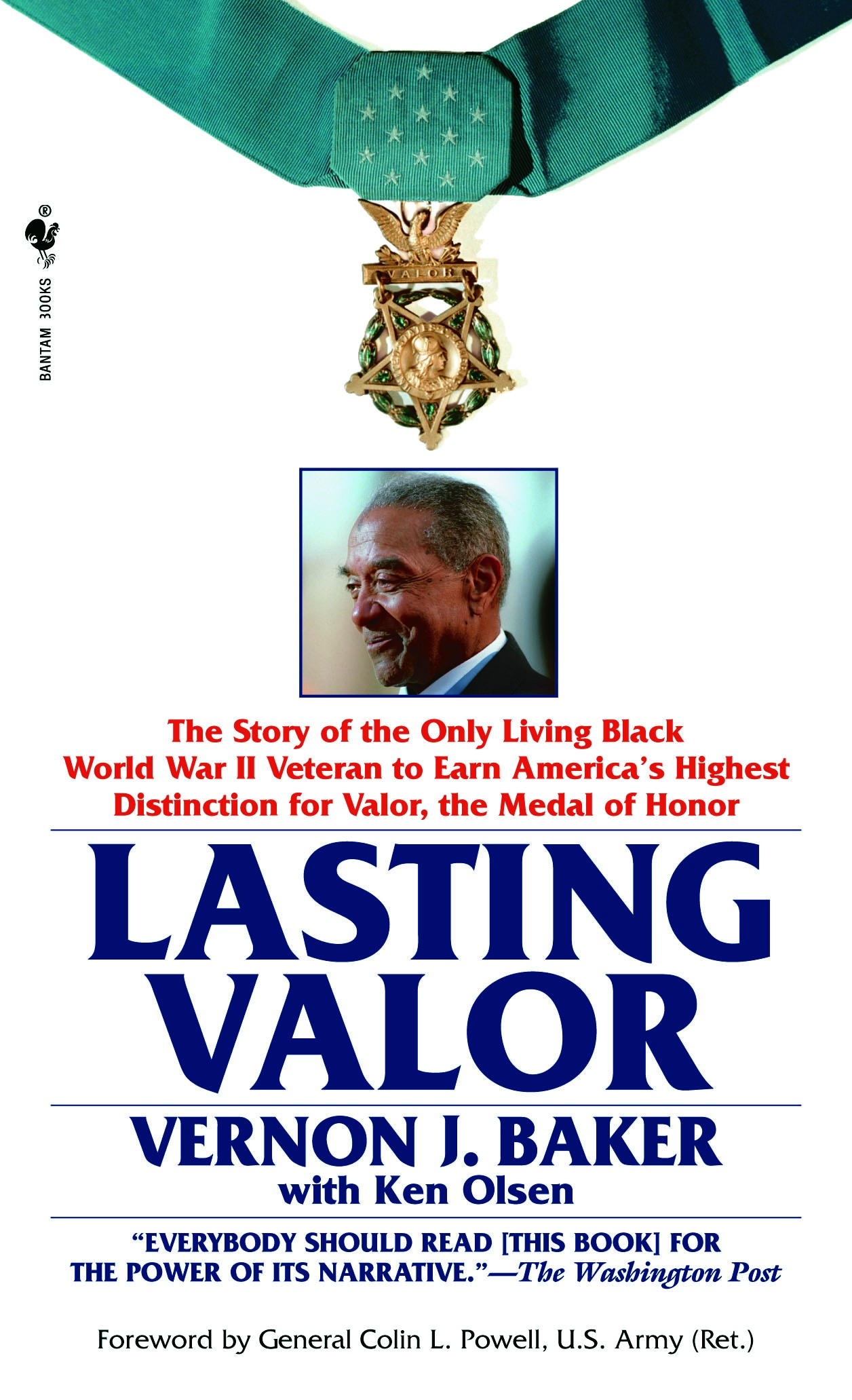
Ken Olsen is author of Lasting Valor (with Vernon J. Baker), the basis for the 2006 NBC documentary by the same name.

Posted in Uncategorized | Tagged | Leave a comment

Sailors Adrift: The Lingering Tragedy of Agent Orange

Sailors suffer illness, disability as VA denies Agent Orange benefits to an entire class of Vietnam veterans

By Ken Olsen

(Copyright 2010 / All Rights Reserved)

Robert Ross heard the low-flying plane heading his direction as he stood on the signal bridge of USS Vega on a late-summer day in 1966. Bathed in Southeast Asian sunshine, he was listening to Frankie Valli & The Four Seasons when he looked up just in time to get a face full of spray.

“The officer on deck was panicking,” Ross recalls. “They hollered, ‘Everybody inside! Agent Orange!’ But it was too late.”

Forty-three years later, time is running out for Ross and tens of thousands of other sailors suffering from various cancers, Parkinson’s disease, diabetes and heart conditions caused by Agent Orange exposure during the Vietnam War. For nearly a decade, VA, acting on a Bush administration directive and a punitive court decision, has severed their benefits or denied their claims. Under these new VA rules, so-called “Blue Water” and “Blue Sky” veterans are deemed not to have suffered any ill effects from the millions of gallons of toxic defoliant spread across the jungles during the war, regardless of any contact they may have had with it. The government’s rationale: they did not set foot on land or couldn’t meet VA’s stringent requirements for proof that they were exposed.

“VA acts as if there is an invisible shield at the shoreline,” says David Greenberg, a Navy veteran. “In reality, Agent Orange blew out over the ocean. It also fell into the rivers and streams that fed out into the ocean. (And) because Navy ships distilled Agent Orange-tainted seawater for cooking, drinking and showering, it’s incomprehensible for VA to deny we were exposed.”

Denise Ross, whose husband is fighting for benefits, calls VA’s treatment of Agent Orange veterans disgraceful. “They have lost everything. They have no way to support themselves. They are dying at an incredible rate. And VA treats them as if they are lying.”

Their last hope: legislation backed by The American Legion and other veterans groups that would restore the Agent Orange benefits Congress first authorized in 1991 for everyone who served in the Vietnam War – on land, in the air or at sea.

Operation Ranch Hand

The U.S. military sprayed 20 million gallons of the deadly dioxin-based herbicide in Vietnam and Laos to strip the dense jungle that gave the enemy cover, to destroy their crops, and to clear ground for U.S. fire bases.Operation Ranch Hand ran from the early 1960s to the early 1970s.

VA still required proof of exposure, beginning in the 1970s when veterans first raised concerns about their own strange illnesses and birth defects among their children, says Bart Stichman, joint executive director of the National Veterans Legal Services Program, which has represented Agent Orange victims since the 1970s.

VA conceded that chloracne, skin lesions caused by chemical exposure, was connected to Agent Orange exposure in 1978. And in 1984, Congress ordered VA to assemble a committee of scientists to study whether the list of illnesses presumed to be caused by Agent Orange should be expanded.

A responded by handpicking scientists, some of whom had worked for chemical companies that manufactured Agent Orange, Stichman says. In essence, “they denied everybody,” Stichman says.

By then, there were 800 studies on dioxin, the key toxin in Agent Orange. VA’s committee “reviewed a couple dozen studies” in 10 months, Stichman says. His group sued, and a federal court in California ordered VA to start over.

Meanwhile, Dow, Monsanto and other Agent Orange manufacturers settled a class-action lawsuit with veterans. The $180 million settlement didn’t go far but was important in making the case for health problems the herbicide inflicted.

Congressional Reprieve

By 1990, the U.S. Centers for Disease Control and Prevention concluded that the 3 million veterans who served in Vietnam suffered a 50-percent-higher rate of non‑Hodgkin’s lymphoma than veterans who didn’t serve in Southeast Asia. VA then added that lone cancer to a short list of Agent Orange illnesses it would cover.

Realizing VA would never go far enough, Congress passed the Agent Orange Act of 1991. The legislation made it clear that anyone who served in the war – whether on land or in Vietnam’s territorial waters – was presumed to have been exposed and should receive VA benefits for illnesses caused by it. It also called for the National Academy of Sciences to determine which diseases were connected to Agent Orange. Over the next decade, soft-tissue sarcoma, lung, trachea and larynx cancer, multiple myleoma, Type 2 diabetes and other diseases were added to the list of Agent Orange conditions VA would cover.

Meanwhile, the Royal Australian Navy discovered that running dioxin-tainted seawater through its ships’ distilling machines – identical to equipment the U.S. Navy used to supply cooking, drinking and bathing water to ships in Vietnam – magnified the dioxin’s strength, Stichman says. A study by the Institute of Medicine, an arm of the National Academies of Science, later confirmed that.

The fortunes of Blue Water veterans changed after George W. Bush became president. In 2002, VA quietly rewrote its rules to require that all veterans prove they had physically set foot in Vietnam – known as “boots on ground” – to qualify for Agent Orange benefits.

“They didn’t go through formal rule-making,” Stichman says. VA started denying new claims and cutting off Blue Water veterans who previously had been receiving benefits. This occurred even though a greater percentage of Vietnam War sailors developed non-Hodgkin’s lymphoma than those who served with ground forces.

“So a guy who gets benefits from 1996 to 2002 for trachea cancer found his benefits severed,” Stichman explains. The sole exception was veterans with non-Hodgkin’s lymphoma.

Haas’ Legal Voyage

Jonathan L. Haas thought he had legal grounds to challenge VA’s sudden exclusion of some 500,000 Vietnam War sailors who became known as the Blue Water veterans. He remembered clouds of Agent Orange drifting from the shore and engulfing his ammunition tender, the Mount Katmai. Forty years later, he filed an Agent Orange claim for diabetes and kidney problems.

Haas fought all the way to the Supreme Court, with the help of the National Veterans Legal Services Program and a friend-of-the-court brief from The American Legion. He lost. And when the high court refused to hear Haas v. Nicholson in early 2009, it effectively affirmed VA’s right to rewrite the rules and prevent Blue Water veterans from receiving Agent Orange benefits.

The Bush administration also pushed for legislation prohibiting Blue Water veterans from qualifying for presumptive Agent Orange exposure. The effort failed. But the Haas decision prevented tens of thousands of sick and disabled Blue Water veterans from getting VA benefits, including Thomas J. Laliberte, a naval photographer who serviced aerial reconnaissance cameras on the A‑5 Vigilantes that flew from USS Constellation in the Gulf of Tonkin.

The airplanes flew in areas recently sprayed with Agent Orange and periodically landed in Vietnam, accumulating dioxin residue, Laliberte says. He routinely worked on the airplane cameras and camera pods after these missions.

A computer programmer, truck driver and pressman since leaving the service, Laliberte says he was never sick until he was overcome with fatigue in August 2006. He couldn’t keep up at work and was laid off from his printing-plant job. Two weeks later, Laliberte was hospitalized with multiple myeloma. His kidney failure was so profound that he was “within days of dying,” Laliberte says.

His wife divorced him five months later. Laliberte was left only with Social Security disability benefits and temporarily moved in with a friend. VA has denied his Agent Orange-exposure claim, and he’s still living in his friend’s spare room.

“I feel abandoned,” Laliberte says, his voice hoarse from the steroids he takes to calm the side effects of chemotherapy. “I know I was there. I know I was exposed. And I feel that way not only for myself, but for the thousands of veterans who need help but can’t get the health care they need.”

Three years ago, Laliberte joined the newly formed Veterans Association of Sailors of the Vietnam War and now serves as its president. Together with The American Legion and other veteran groups, the VASVW is pushing legislation to restore veterans’ Agent Orange benefits.

Rep. Bob Filner, D-Calif., chairman of the House Veterans Affairs Committee, stressed urgency before hearings he called in May. “Congress’ original intent was to provide these veterans with benefits based on their exposure to Agent Orange and other deadly herbicides … regardless of arbitrary geographic line-drawing,” he wrote in a letter to his colleagues.

VA declined to address specific issues raised by veterans in this article. But in a statement prepared for The American Legion Magazine, VA noted it has proposed adding hairy cell leukemia, Parkinson’s disease and ischemic heart disease to the list of illnesses presumed to be connected to Agent Orange exposure, and “is committed to pursuing all medical research efforts that improve our understanding of diseases that could be presumptively service-connected.”

Ross’ Dying Wish. Nevada veteran Robert Ross wonders if he’ll outlive the VA appeals process. He developed blistering sores on his back in the 1970s and diabetes in 1995. He suffered heart failure in 2001, but is not a transplant candidate because of kidney problems. He had thyroid cancer, suffers from neuropathy, and fights an indigestion problem. Two years ago, doctors likened his life expectancy to that of a terminal-cancer patient.

Ross filed a claim with the Reno, Nev., VA in 2008. He was denied as a result of the Haas ruling. He cannot prove he took the face full of spray that late-summer day in 1966. He cannot prove he was close enough to the shore to see people’s faces. He cannot prove his ship was tied to a dock on several trips into Da Nang Harbor to re-supply U.S. ships.

“People are under the impression that these men have access to proof of where they were all of the time, of incidents that occurred while they were on ship, and every location of their ship,” Denise Ross says. “It was wartime. A lot of that information wasn’t put in the ship’s log or written down.”

Ross filed a notice of disagreement with the Reno VA in April 2009. “We provided them the doctor’s letter that said my husband has a year to live,” Denise says. “I begged them. I said, ‘My husband is dying.  Can’t you just deny his claim so we can file an appeal?’ We’re concerned about our son, who has asthma and other medical issues.”

That denial finally came this spring, a year after the Rosses’ urgent plea. They will appeal this summer. The case will drag on perhaps another year – a year Ross might not have.

The Rosses, like Laliberte, are putting their hope in the legislation.

“Every senator and member of Congress has the responsibility to step in immediately,” Denise says. “They can’t put a stop to the suffering. But they can restore the benefits that have been denied these men. I want it made right not just for my husband, but for everyone.”

This story appeared in the July issue of  The American Legion Magazine.

Posted in Uncategorized | Tagged | 34 Comments

Welcome to Veterans Voices, which highlights stories about active duty military, National Guard, Reserve and veterans by writer Ken Olsen, author of Lasting Valor and frequent contributor to The American Legion Magazine

www.lastingvalor.com

Posted in Uncategorized | Tagged , | Leave a comment